Water Damage Restoration Escondido Fast, Safe Help in CA
Water damage restoration Escondido guide: safety steps, restoration services, realistic costs and insurance records for homes and businesses. Request help any hour.
A leaking pipe, overflowing appliance, or unexpected stormwater intrusion can leave more than a wet floor. Water may travel beneath flooring, collect behind cabinets, or soak into materials that appear dry from the outside. Knowing what to do next can help protect your property and avoid unnecessary restoration decisions.
If you need water damage restoration Escondido help, the priority is to identify the water source, make the affected area safe, understand the extent of damage, and arrange the appropriate cleanup. If water is still spreading, call (781) 887-8424 now.
Water Damage Restoration Escondido: Emergency Help
When water enters a home or commercial property, the first decision is not which drying equipment to use. It is whether the area is safe and whether more water is still entering the building.
Control the Source Safely
If the leak comes from an accessible water supply connection, shut off the appropriate valve when it is safe to do so. If the source is concealed, a plumber or another qualified specialist may be needed.
Electrical and Contamination Hazards
Do not enter standing water near electrical equipment, exposed wiring, or damaged appliances. Avoid sewage and floodwater of uncertain origin. If the building shows signs of structural instability or another immediate danger, seek appropriate emergency assistance.
Document Before Cleanup
Once conditions are safe, photograph the affected areas, record when the problem was discovered, and keep receipts for necessary protective measures.
For active water, use our 24/7 emergency water damage response line.
Can You Clean Up a Small Water Spill Yourself?
Not every spill requires professional restoration.
A small amount of clean water on an accessible tile or other nonabsorbent surface may be manageable if the source has stopped, the area is safe, and the water can be removed and dried promptly.
The situation changes when water reaches carpet padding, wood flooring, drywall, insulation, or enclosed spaces. The same applies when the water source is unknown, contamination is suspected, or materials have remained wet for an extended period.
If you cannot determine whether moisture is still present, an appropriate assessment may be more useful than repeatedly drying the visible surface. Book an on-site water damage assessment.
Signs That Professional Water Damage Assessment May Be Needed
Consider further evaluation when you notice:
- Water spreading through more than one room.
- Swollen baseboards, lifting flooring, or soft wall materials.
- Ceiling stains beneath an upstairs bathroom or plumbing line.
- Dampness returning after the visible water has been removed.
- Sewage odors, visible mold-like growth, or potentially contaminated water.
- Moisture affecting electrical equipment, stored inventory, or inaccessible building spaces.
These observations do not establish the full extent of damage by themselves. They indicate that the condition may need closer investigation.
AWM Water Damage Restoration provides water damage information and a way to request assistance for properties in the San Diego region. Depending on service coverage and availability, a water damage restoration Escondido inquiry may be connected with an independent restoration contractor serving Escondido. The responding provider should confirm its availability, qualifications, assessment arrangements, and proposed charges before work is authorized. See also our San Diego water damage restoration services or learn about our team.
Request Water Damage Assistance
What Is Water Damage Restoration?
Water damage restoration is the process of removing water, drying the structure with monitored equipment, cleaning affected materials, and repairing or replacing what cannot be saved. For water damage restoration Escondido projects, that usually means two stages: mitigation, which stops further damage through extraction, drying, and removal of unsalvageable materials, and restoration or reconstruction, which repairs finishes afterward. Water mitigation in Escondido, CA and the repairs that follow may be performed by the same company or by separate contractors.
Common Causes of Water Damage in Escondido Properties
Different water sources create different restoration problems, so every water damage restoration Escondido job starts by identifying the source. Correcting the source and addressing the resulting moisture are related tasks, but they are not always performed by the same specialist.
Burst Pipes, Slab Leaks, and Plumbing Failures
A leaking supply line may release water behind a wall, beneath a sink, or around a water heater. A suspected slab leak can require specialized plumbing investigation before the affected floor assembly can be evaluated.
A plumber may repair the failed line, while a restoration specialist assesses whether surrounding materials have absorbed water.
The repair of a pipe does not necessarily mean the floor, wall, or cabinetry around it is dry.
Appliance and Bathroom Leaks
Dishwashers, washing machines, refrigerators, water heaters, overflowing tubs, and bathroom fixtures can release water into neighboring materials.
Cabinet bases, flooring joints, and wall openings may allow water to spread beyond the original leak.
The appropriate response depends on how long the water was present, what materials were affected, and whether contamination is involved.
Roof Leaks and Ceiling Water Damage
Rainwater can enter through a damaged roof or exterior opening and follow building components before appearing as a ceiling stain.
The visible stain may be some distance from the actual entry point.
Roof or exterior repairs may be required to prevent recurrence, while restoration work addresses materials already affected inside.
Sewage Backups and Contaminated Water
Sewage backups require additional safety precautions because the water may contain microorganisms and other contaminants.
Cleaning a sewage-affected floor is different from drying a small spill from a clean supply line. Some porous materials may not be suitable for restoration, depending on the contamination and condition.
Ask the responding provider to explain how water conditions affect the proposed removal, cleaning, and drying decisions. Learn more about water damage cleanup.
Stormwater and Flood Damage
Heavy rainfall, runoff, drainage problems, or water entering through exterior openings can affect garages, living spaces, storage areas, and commercial premises.
Floodwater may carry sediment, sewage, or other contaminants, so it should not automatically be treated like clean indoor water.
An assessment should distinguish the source of water from the building materials and belongings that were affected. See flood damage restoration.
Residential and Commercial Water Damage Restoration Escondido
A water loss in a single-family home presents different coordination requirements from one affecting an office, retail property, or multiple apartments.
Residential Water Damage
In homes and condominiums, water may move between adjoining rooms or between floors. Moisture beneath flooring and behind installed cabinetry can complicate the decision to dry materials in place or remove them.
For rental properties and condominiums, the owner, tenant, property manager, or homeowners association may have separate roles in arranging access, reporting damage, and authorizing work.
It is important to establish who is responsible for each decision before demolition or reconstruction begins.
Commercial Water Damage
Business properties may have inventory, equipment, customer-facing areas, or essential operations affected by water.
The restoration assessment may need to consider which spaces can remain occupied, what equipment requires separate evaluation, and how work can be coordinated with building management.
Offices, shops, and other commercial properties may also require documentation of damaged contents and communication between several responsible parties.
Contents and Personal Property
Furniture, documents, electronics, textiles, and stored merchandise do not all respond to water exposure in the same way.
Some items may be candidates for specialized cleaning or drying. Others may be too contaminated or deteriorated to preserve safely.
If packout, storage, electronics assessment, or contents restoration is necessary, confirm whether those services are included in the contractor’s agreement or require separate arrangements.
Do not operate water-affected electrical equipment until it has been evaluated appropriately.
What Happens After Standing Water Is Removed?
Removing visible water is an important first step in any water damage restoration Escondido project, but it does not establish that a building is dry.
Water can enter absorbent building materials and remain there after the floor surface appears normal.
Why Water Can Remain Hidden Inside Walls and Floors
Drywall, wood, insulation, and certain flooring assemblies can absorb moisture.
Water may also travel along seams, beneath finished surfaces, and into wall cavities.
As affected materials dry, some of the retained water evaporates into the indoor air. Humidity and airflow conditions then influence how efficiently further drying can occur.
This explains why a wet room sometimes requires more than a mop, towels, or an ordinary household fan.
The affected area may need appropriate moisture measurements to determine where water remains and whether additional access is necessary. A water damage inspection can help.
Structural Drying and Moisture Monitoring
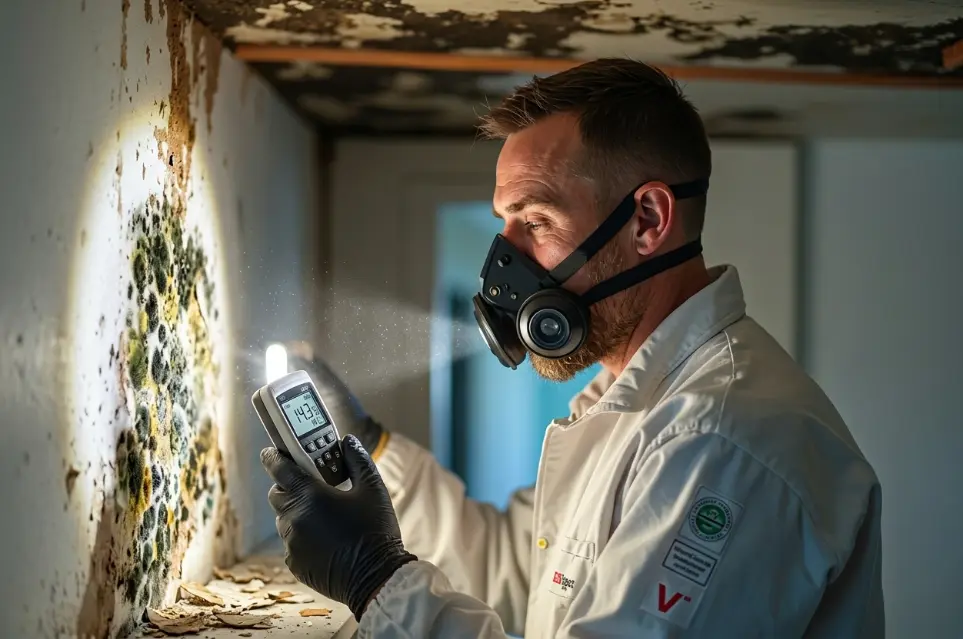
Depending on the loss, a restoration provider may use extraction equipment, air movers, dehumidifiers, and moisture-measurement instruments.
Equipment selection and placement should reflect the affected materials and the actual site conditions.
Useful project documentation may include initial readings, observations of affected materials, drying progress, equipment changes, and final findings.
The ANSI/IICRC S500 Standard for Professional Water Damage Restoration addresses building materials, drying technology, assessment, safety, and project documentation.
Ask the provider what drying approach is proposed and how the results will be evaluated.
Can Wet Building Materials Be Saved?
Not every wet material automatically needs demolition.
Some materials may be suitable for drying and retention when conditions allow. Others may require removal because of contamination, deterioration, inaccessible moisture, or material-specific limitations.
For example, a sound structural component exposed to a clean-water incident may present a different restoration decision from contaminated insulation or severely deteriorated flooring.
The appropriate decision depends on the material, the water source, exposure conditions, and inspection findings.
A contractor recommending removal should be able to explain why that work is necessary.
When Reconstruction Becomes Necessary
Water mitigation and reconstruction are separate stages.
Mitigation addresses the water-related conditions. Reconstruction may involve replacing drywall, flooring, trim, cabinetry, or other damaged components after the appropriate restoration work.
Some providers perform both stages, while others coordinate with separate repair contractors.
Confirm who will manage repairs, whether a separate estimate is required, and what documents will be provided at the handoff.
For more detailed explanations, see Water Removal, Water Mitigation, Water Damage Inspection and water damage repair.
Water Damage Restoration Terms Explained
Anyone researching water damage keywords, water restoration keywords, or keywords for restoration will see the same handful of terms repeated. They are not interchangeable.
Extraction
Removing standing or accessible water.
Mitigation
Stopping further damage: extraction, drying, and removing unsalvageable materials.
Structural Drying
Drying moisture retained inside building materials, with monitoring.
Remediation
Often used for contamination or mold-related cleanup. Not every water loss needs it.
Reconstruction
Repairing or replacing finishes such as drywall, flooring, and cabinetry.
Escondido Creek, Reidy Creek, and Local Flooding Conditions
Water damage inside a home may result from ordinary plumbing failures, but water damage restoration Escondido planning should also consider that the city has defined stormwater and floodplain considerations.
These conditions are not uniform across the city.
Escondido Creek and Reidy Creek
Escondido Creek is an important part of the area’s drainage network, and Reidy Creek contributes to the local watershed.
Certain areas associated with these waterways have documented flood hazards.
However, living near a creek does not automatically mean that a property lies within a FEMA Special Flood Hazard Area. The correct designation depends on the individual location and current mapping.
Likewise, a property outside a mapped floodplain can still experience water damage from plumbing, roofing, or localized runoff.
East Valley Parkway and Midway Drive Drainage Improvements
The City of Escondido has documented stormwater drainage limitations within the defined East Valley Parkway and Midway Drive improvement project area.
According to the City’s published environmental documentation, existing drainage limitations have contributed to mapped floodplain exposure and localized flooding concerns in that project area.
The project proposes additional stormwater conveyance infrastructure and connections to Escondido Creek.
The City approved the project’s environmental determination in April 2026. That approval should not be interpreted as confirmation that every proposed improvement has been completed.
This information is relevant to local flood planning, but it does not establish that all properties along East Valley Parkway or Midway Drive experience flooding.
For details, consult the official California environmental project record.
Check Your Property’s Flood Zone
Property owners can use the FEMA Flood Map Service Center to review published flood-hazard information for a particular address.
Flood mapping can inform property planning and insurance discussions. It does not replace a site inspection after an actual water-loss incident.
The source of the damage remains important because external flooding and an indoor pipe leak may have different cleanup and insurance implications.
Water Damage Considerations Across Escondido Neighborhoods
Escondido contains historic residential areas, established neighborhood groups, commercial corridors, and nearby unincorporated communities.
A property’s exact location can affect which public agency handles drainage concerns, whether special repair requirements apply, and which providers can accept a water damage restoration Escondido request.
Old Escondido Historic District
The City established the Old Escondido Historic District in 1989. It includes approximately 900 homes and contains a range of historic architectural styles.
Certain exterior changes, including window replacement, roof work, and other improvements, may require historic-preservation review.
When water damage leads to exterior reconstruction, owners should check applicable City requirements before approving those alterations.
This does not mean every home in the district has aging plumbing or requires specialized water mitigation.
Downtown Escondido and Commercial Areas
Downtown and the Grand Avenue commercial corridor present property-management considerations that may differ from those of a detached home.
A water loss affecting a tenant space, shared building system, business equipment, or occupied retail area may require coordination between owners, tenants, and the responsible service providers.
The appropriate restoration scope should reflect the actual building and damage, not a generalized assumption about downtown properties.
Neighborhood Groups Recognized by the City
The City’s official Neighborhood Groups Map identifies the following community groups:
Adams/Gamble, CALM Grove, Cedar-Cedarbrook, Lansing Circle, Los Arboles, Mission Grove, Mission Park Area, North Hickory, Old Escondido Historic District, Ontario, Orange Place, Park Place, Rtf, Rustic Village, South Elm/Hickory, South Tulip Group, The Elms, WIN, and West Hillside Group.
These names identify mapped neighborhood groups. They do not establish that every location has the same flood exposure, plumbing conditions, property age, or history of water damage.
Before arranging restoration, confirm that the actual responding contractor serves the property’s address.
Nearby Communities and Jurisdiction Boundaries
Areas associated with the broader Escondido planning region include Harmony Grove, Eden Valley, Jesmond Dene, Lake Hodges, Lake Wohlford, Citrus Valley, Felicita Park, Lehner Valley, North Broadway, and Rock Springs.
Some of these are unincorporated communities or planning areas rather than neighborhoods entirely within Escondido city limits.
This distinction matters when looking for municipal drainage assistance, determining applicable permitting authorities, or confirming a contractor’s service territory.
An Escondido mailing address should not be used as the sole test of municipal jurisdiction.
Public Storm Drains, Sewer Lines, and City Assistance
Not every water problem belongs to a private restoration contractor.
The City of Escondido operates public infrastructure and provides reporting channels for certain stormwater and sewer concerns.
Storm Drains and Sanitary Sewers Are Different Systems
Escondido’s storm drain system conveys runoff through gutters, channels, and pipes toward local waterways.
It is separate from the sanitary sewer system, which carries wastewater for treatment.
This distinction matters because a blocked public storm drain, a damaged private sewer lateral, and contaminated water inside a building may involve different responsibilities.
The City explains that property owners generally maintain their sewer lateral up to its connection with the public main, including relevant portions beneath streets and sidewalks.
A qualified specialist may be needed to determine the source and the applicable repair responsibility.
Reporting Public Drainage Problems
Residents can use the City’s Report It! system to report non-emergency concerns such as blocked storm drains, debris, or certain public infrastructure problems.
An immediate danger should be reported through the appropriate emergency channel.
City reporting does not automatically arrange cleanup of damaged materials inside a privately owned property.
Visit the City of Escondido storm-preparedness page for public reporting and preparation information.
Sandbags and Storm Preparation
The City publishes sandbag information for eligible Escondido residents at the Escondido Sports Center in Kit Carson Park.
Check the official City page for current eligibility, access instructions, hours, and availability before visiting.
Routine precautions such as clearing accessible gutters, checking drainage paths, and inspecting vulnerable exterior openings can help prepare a property for wet weather.
These measures cannot eliminate every possibility of water intrusion.
Water Damage Restoration Escondido Costs
The cost of water damage restoration Escondido property owners pay depends on the work actually required.
A small, accessible clean-water incident may involve a very different scope from sewage contamination, extensive concealed moisture, or structural repairs.
Factors that can affect a restoration estimate include the water source, affected materials, size of the work area, access conditions, equipment requirements, monitoring, removal, disposal, and reconstruction.
What Should a Written Estimate Include?
Before authorizing work, ask for an explanation of:
- The areas and materials identified as affected.
- Proposed extraction, cleaning, and drying services.
- Equipment charges and how usage will be billed.
- Monitoring visits and documentation.
- Materials proposed for removal and disposal.
- Whether contents handling or reconstruction is included.
- Inspection or emergency-response fees.
- Circumstances requiring additional approval.
A free inspection, if offered, should not be assumed to include every test or service. Confirm its terms with the actual provider.
What If the Contractor Finds More Damage?
Water trapped beneath flooring or behind walls may not become apparent until work begins.
Additional findings can change the proposed scope.
Ask the contractor to explain the new evidence, identify the additional work, and provide the appropriate revised estimate or written change order before proceeding.
A clear record of approved work can be valuable during both billing and insurance discussions.
Insurance Claims and Water Damage Restoration Escondido Documentation
California homeowners policies may provide coverage for certain sudden and accidental water losses, but exclusions and limitations vary.
Gradual leakage, maintenance-related deterioration, and external flooding may be treated differently. Standard homeowners policies generally do not cover flood damage, so separate flood insurance may be relevant.
The California Department of Insurance provides guidance on documenting property damage and understanding coverage questions.
Documentation to Keep
Maintain photographs of the damage, repair receipts, estimates, invoices, work authorizations, and available restoration records.
If a provider conducts moisture monitoring, ask what written information will be supplied.
Review your policy and contact the insurer according to its reporting requirements. A restoration provider can assist with documentation if that service is part of its actual offering, but it cannot guarantee that an insurance claim will be approved.
Contractor Charges Versus Insurance Payments
A contractor’s invoice and an insurer’s approved estimate may not be identical.
The contractor’s agreement determines contractual responsibilities, while the insurer evaluates coverage and reimbursement under the policy.
If differences arise, request an itemized explanation before assuming that every charge will be paid by the insurer.
Choosing Water Damage Restoration Escondido Companies You Can Trust
A company advertising emergency restoration should be able to explain who will respond, what work it can perform, and how the customer will be charged. When comparing water damage restoration Escondido companies, or scanning water damage restoration near me results, the questions below matter more than the ad copy.
Confirm the Actual Service Provider
Ask for the legal business name of the company that will inspect the property and issue the agreement.
If the initial contact is through an information or referral website, verify the identity of the independent contractor who may perform the work.
Also confirm service availability for the specific Escondido address.
Verify Licensing, Certifications, and Insurance
California’s Contractors State License Board offers a public license-lookup resource.
Ask about applicable licensing, insurance, and relevant technical qualifications. If a company advertises IICRC-certified technicians, request confirmation of the credentials associated with the personnel or business.
A provider’s marketing statements should not replace independent verification.
Training and Water Damage Restoration Classes
Water damage restoration classes, such as IICRC-approved courses in water damage restoration, teach technicians drying principles, safety, and documentation. Completing a class is a training credential. It does not by itself show that a particular company follows the ANSI/IICRC S500 standard on your job, so ask who on the team holds which credentials.
Ask About Emergency Availability
A telephone line being answered around the clock does not necessarily mean a restoration crew is immediately available.
Before relying on an arrival estimate, ask whether the provider can accept the job, what the first visit will include, and whether additional trades may be required.
Get a Written Scope and Estimate
Compare written scopes, not just totals. A lower number can leave out drying, monitoring or disposal. See the cost section above for what an estimate should include.
Understand What Happens After the Work
Before signing, identify who will communicate progress, approve scope changes, document completion, and coordinate any remaining repairs.
If different contractors handle mitigation and reconstruction, determine who is responsible for each stage.
Clear answers can help avoid confusion after the initial emergency has passed.
Not Sure What You Need? Pick Your Situation
Choose the line that matches your situation. Each link opens a page on this site with the next step.
Frequently Asked Questions About Water Damage Restoration Escondido
What is water damage restoration?
It is the process of removing water, drying the structure with monitored equipment, cleaning affected materials and repairing or replacing what cannot be saved.
How quickly should water damage be addressed?
As soon as it is safe to do so. The EPA recommends promptly drying wet materials, ideally within 24–48 hours where feasible, to reduce mold risk. This is not a guaranteed deadline for completing an entire restoration project.
Does every wet wall need to be removed?
No. Whether a material can remain depends on its condition, the water source, contamination, accessibility, and whether effective drying is appropriate. Removal should be based on relevant findings rather than a blanket rule.
Can water damage be present even after the floor looks dry?
Yes. Some materials may retain moisture beneath or behind the visible surface. Suitable moisture measurements and inspection can help determine whether additional attention is necessary.
Is professional restoration necessary after a small clean-water spill?
Not always. A minor spill on a safe, nonabsorbent surface may be manageable with prompt cleanup. Professional assessment becomes more relevant when water reaches porous or concealed materials, remains present, or may be contaminated.
What if I discovered the water damage several days later?
The length of exposure matters, but it does not automatically determine whether restoration is impossible. An assessment may help identify retained moisture, contamination, material deterioration, and suitable next steps.
Can the same company handle drying and reconstruction?
Some companies provide both services; others work with separate contractors. Confirm the actual provider’s capabilities and whether reconstruction is included in the agreement.
Does homeowners insurance cover flood cleanup in Escondido?
Standard homeowners insurance generally excludes external flooding. Other sudden water losses may be covered depending on policy terms. Review the policy and ask the insurer about the particular cause of damage.
What should I receive when restoration work is complete?
Ask for an explanation of the work performed, applicable invoices, approved changes, and any available moisture or completion documentation. Confirm whether additional repairs or inspections remain necessary.
Water Damage Restoration Escondido: Request Help Today
Water damage restoration Escondido begins with understanding the actual condition of the property—not assuming every wet material needs replacement or that removing standing water has solved the problem.
Whether the incident involves an appliance leak, concealed plumbing failure, sewage backup, or stormwater intrusion, an appropriate response should address safety, source control, affected materials, restoration decisions, and any remaining repairs.
For Active Water Damage
Call (781) 887-8424 now. See how round-the-clock emergency help works.
For Non-Emergency Water Damage
Use our contact page to request an assessment, and confirm what the estimate includes.
What Information to Have Ready
Address, property type, likely source, when it happened, affected areas and whether water is still present.
For water damage restoration Escondido residents and businesses can request, AWM Water Damage Restoration provides water damage information and a way to request assistance. Depending on service coverage and availability, your inquiry may be connected with an independent restoration contractor serving Escondido.
Confirm the responding provider’s qualifications, service availability, proposed work, and costs before authorizing restoration.
Request Water Damage Assistance
Pages near our water damage restoration Escondido coverage: Santee, El Cajon and La Mesa. We also cover Chula Vista, Carlsbad and Del Mar.
Other locations: Los Angeles · San Francisco · San Jose · Phoenix
AWM Water Damage Restoration — Office: 3919 30th St, San Diego, CA 92104 · Read restoration tips and guides · Disclaimer · Privacy Policy