Water Damage Cleanup in San Diego, CA
A burst hose. A slab leak. A roof that finally gives out. Water always finds somewhere you can’t see — we find it first, extract it, and dry it out properly.
Water Damage Cleanup
A washing machine hose lets go behind the drum. A slab leak starts as a warm patch on the tile in the hallway. A roof holds up fine for six dry years and then leaks the first weekend it rains hard. None of these announce themselves clearly, and by the time most people call for help, water has usually already gotten somewhere they can’t see — under the baseboard, into the subfloor, up the back of a cabinet.
That’s really the whole reason “cleanup” means more than pulling water off a floor. Anyone can mop up a puddle. The harder part is figuring out where the water actually went, how much of it soaked into drywall or framing, and how long it needs to run through drying equipment before it’s genuinely gone rather than just invisible. Skip that step and you end up dealing with the same problem again in a few weeks, usually as a smell instead of a puddle. A proper water damage assessment is what actually confirms whether it’s gone.
If you’re standing in water right now, or watching a ceiling stain grow, the short version is: get the source stopped if you safely can, get someone out to look at it, and don’t assume it’s fine just because the floor looks dry by tomorrow morning.
Whatever You Search For, We Handle It
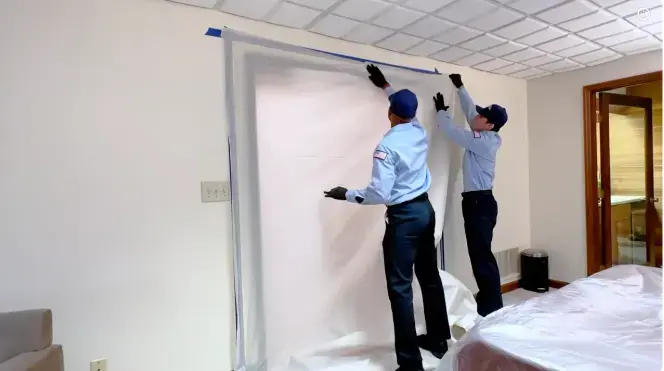
People describe this problem a dozen different ways when they’re searching for help, and we cover all of them under one roof. Whether you need water damage cleanup for a single room or full water damage clean up service for a flooded floor, our crews handle water damage removal, straightforward water removal, and mechanical water extraction as the very first step on-site.
From there it moves into proper water damage mitigation and, where materials are too far gone, water damage restoration and repair. If your search brought you here looking for a water damage cleanup company near me or emergency water damage cleanup near me, that’s exactly the kind of same-day response we’re built for — including 24/7 water damage cleanup for active leaks and floods.
We also handle the situations that go beyond a simple leak: flood damage repair, contaminated sewage cleanup, and residential water damage repair alongside full commercial water damage restoration for offices, retail, and multi-unit properties across the county. And when it’s urgent, our emergency water damage cleanup San Diego crews are dispatched the same day — whether you found us searching water damage cleanup San Diego for a scheduled inspection or water damage cleanup San Diego near me at 3 a.m. with an active leak.
Emergency Water Damage Cleanup in San Diego
When Water Damage Requires Immediate Cleanup
A little spill from a spilled glass doesn’t need a phone call. A few clear signs do. Standing water — even a thin layer across a kitchen floor — starts working into baseboards and subfloor within a matter of hours, not days. Past the first 24 to 48 hours, damp porous materials start supporting microbial growth, which is why a clean water leak left too long stops being a simple drying job and starts being something closer to a mold job.
Water under flooring is trickier because it hides well; laminate and engineered wood in particular can look completely normal on top while the subfloor underneath has already gone soft. A stained or sagging ceiling almost always means the water came from somewhere else entirely and has been dripping longer than the stain suggests. Cabinets that have started to swell or baseboards that are bowing away from the wall are a slower-motion version of the same warning.
Before the Cleanup Team Gets There
If you can get to the shutoff valve or unplug the leaking appliance without wading through water near outlets, do that first. Skip any room where water is anywhere near an outlet, a power strip, or a light fixture. If you can shut off power to that area at the breaker without stepping into standing water, do it; if not, stay out and wait for someone who can. Treat any water coming from a drain, toilet, or unknown source as contaminated rather than assuming it’s clean.
Beyond that, move what you can out of the way, and take a few photos or a short video before anything gets moved, tossed, or dried out.
What Not to Do
Don’t go into a room with standing water near an active electrical source. Don’t assume the space is dry just because it looks dry — moisture readings inside a wall or under a floor routinely stay high for days after the surface feels fine. Don’t stir up water that’s discolored or smells off. And hold off tossing wet carpet or drywall before it’s photographed, especially if insurance is going to be part of this.

Water Removal, Extraction, Cleanup, Mitigation, Restoration — What’s Actually the Difference
People use these words interchangeably on the phone, and honestly, most of the time it doesn’t matter. But the terms do map to different parts of the job.
Water removal is the catch-all — getting water out of a space, whether that’s a mop and shop vac or a full crew with commercial equipment. Extraction is the mechanical version: pumps, truck-mounted units, portable extractors pulling standing water and saturated carpet dry.
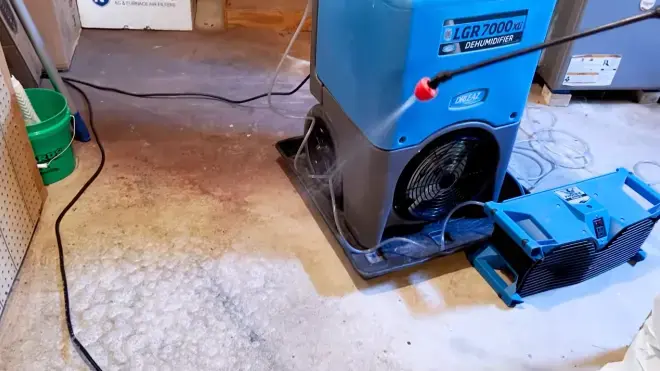
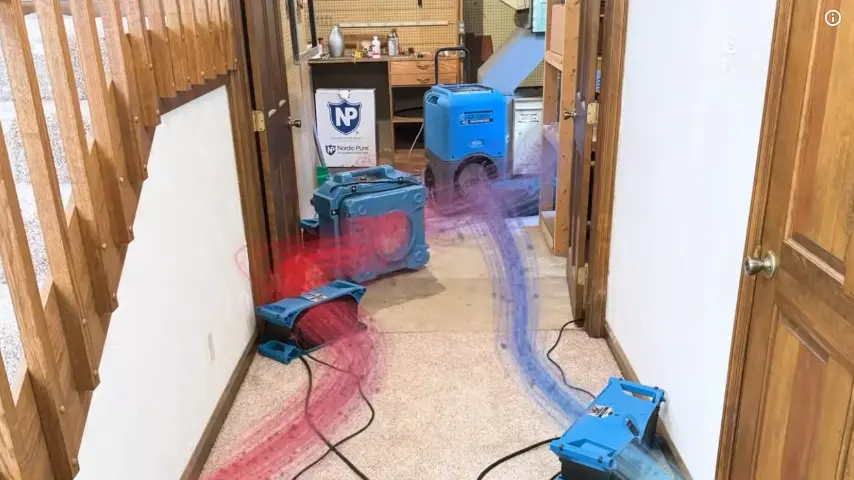
What extraction doesn’t do is deal with water already soaked into framing, subfloor, or drywall. That’s structural drying — air movers and dehumidifiers running for days, not hours, until moisture readings come back to normal. This is the part that gets skipped by anyone trying to save money, and it’s the part that determines whether you’re dealing with mold in a month.
“Water damage cleanup” covers all of it strung together — inspection, extraction, drying, cleaning, sorting what’s salvageable. “Mitigation” means roughly the same thing but leans toward the insurance side. “Restoration” is used more loosely, sometimes meaning the whole job including repairs. Reconstruction is different — actual construction work, new drywall, new flooring, rebuilt cabinets — that starts once it’s clear certain materials need repair instead of drying.
What’s Actually Involved in a Water Damage Cleanup
Inspection comes first — finding where the water came from, how far it spread, and what’s happening in adjacent rooms. A bathroom leak upstairs can travel along a joist and show up as a stain in a completely different room downstairs. This is usually where a formal water damage assessment comes in.
From there it’s getting the standing water out — a submersible pump, a truck-mounted extractor, or a wet vac, depending on what’s holding the water and what surface it’s sitting on.
Once the bulk water is gone, cleaning and sanitizing the affected surfaces matters, particularly if the water wasn’t clean to start with. And then there’s everything that wasn’t part of the structure but got caught up anyway — furniture, carpet padding, personal items. Sorting what’s salvageable comes down to the material, how long it sat wet, and what kind of water it was sitting in.
Step by Step
Water Damage Cleanup Process
Initial Emergency Assessment
Understanding the immediate situation — is water actively flowing, is the area safe, and what needs to happen right away versus what can wait for the full inspection.
Identify the Water Source and Affected Areas
The source needs to be found and, where possible, stopped, while mapping how far the water has traveled.
Determine the Water Condition and Contamination Risk
A clean supply-line leak is handled differently than sewage backup water — this assessment sets the safety precautions and cleaning approach.
Remove Standing Water
Pumps, extractors, and vacuums clear bulk water from floors, carpet, and other surfaces.
Locate Hidden Moisture
Moisture meters check walls, floors, ceilings, cabinets, and subfloors for water that isn’t visible from the surface.
Set Up Structural Drying and Dehumidification
Air movers and dehumidifiers get positioned based on the moisture map, targeting the specific areas that tested wet.
Monitor Moisture During Drying
Moisture levels are checked periodically to confirm materials are drying at the expected rate.
Clean and Sanitize Affected Areas
Surfaces are cleaned and, where needed, sanitized to address contamination from the original water source.
Evaluate Damaged Materials and Contents
Materials and belongings are assessed to determine what dried successfully and what needs replacing.
Document the Work and Drying Progress
Photos, moisture readings, and a record of the work performed are compiled — useful for quality control and insurance.
Final Moisture/Damage Assessment
A final round of moisture readings confirms the structure has actually reached a dry standard.
Repair or Reconstruction Planning When Required
If any materials were removed or damaged beyond cleaning, this step outlines what needs to be rebuilt or repaired.
Types of Water Damage We Clean Up
Every water damage situation is different — the source, the speed, and the contamination level all change how it needs to be handled.
Burst Pipes
A sudden release of water, often from age, pressure, or a hard freeze — often inside a wall cavity where you can’t see it.
Slow Plumbing Leaks
The sneaky one. It doesn’t announce itself, so it goes on longer and travels further before anyone notices.
Appliance Leaks
A washing machine hose, dishwasher seal, water heater, or fridge line — small at first, easy to miss.
Toilet & Bathroom Overflow
Contamination level depends entirely on the source, and bathroom floors sit directly above whatever room is below.
Slab Leaks
Particularly common in San Diego given how many homes are built on concrete foundations. Invisible until it works its way up through flooring.
Roof & Ceiling Leaks
A delayed-reveal problem, often showing up only during heavy rain and written off as a one-time thing.
Storm Damage
Wind-driven rain and drainage failures pushing water into places that are normally dry.
Large Indoor Flooding
Calls for faster and larger-scale extraction than a single contained leak.
Sewage Backups
Contaminated water from a main line or septic issue that needs different handling, both for safety and what can be saved.
Commercial Properties
Same range of causes as homes, just with a different set of consequences — lost work hours until the space is usable.
IICRC Standard
Water Damage Categories and Contaminated Water Cleanup
The restoration industry doesn’t leave “how dirty is this water” up to guesswork. The IICRC publishes an actual standard that sorts every water loss into one of three categories — and that category drives almost every decision on the job.
Clean Water
A broken supply line, a toilet tank (not the bowl), rain in its first moments before it’s touched the ground. Not considered a health risk if dealt with quickly.
Gray Water
Washing machine discharge, a dishwasher overflow, a toilet bowl without solid waste. Not the worst category, but enough that you don’t want to wade through it barefoot.
Black Water
Sewage, floodwater, anything that’s picked up ground contaminants. Drying contaminated drywall isn’t an option here — it comes out.
Category Isn’t Fixed
Clean water that sits for roughly 24 to 48 hours, depending on temperature, is treated as having degraded into Category 2 territory by default — regardless of how it started. That’s a big part of why speed matters more than people assume.
The Flood Cut
In Category 2 situations, it’s common for the bottom foot or two of affected drywall to be cut away entirely — restoration crews call this a flood cut — with the exposed stud cavity treated before new material goes back in. In Category 3, that same logic extends to essentially all the porous material that got wet.
Not a Judgment Call
Appearance and odor are notoriously unreliable — water that looks perfectly clear can still be Category 2 depending on where it came from. Classification is based on source and dwell time, not how the water looks.
Cleaning Water-Damaged Floors, Walls, Ceilings, and Materials
Not every material reacts to water the same way, which is why the same water loss can mean “clean and dry” for one part of a room and “tear out and replace” for another, a few feet away.
Carpet & Padding
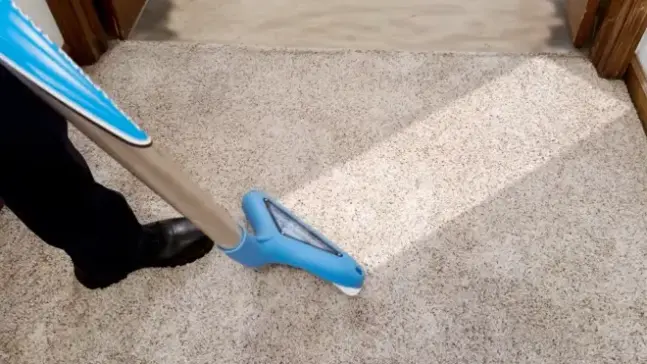
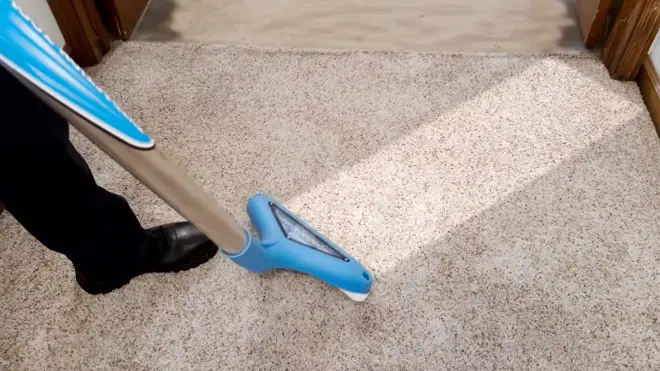
Carpet often cleans and dries fine if addressed fast. The pad underneath usually soaks up water and needs replacing even when the carpet survives.
Wood Flooring
A toss-up depending on absorption and how quickly drying started. Some can be dried and refinished, others cup and buckle.
Tile
Shrugs off water well, but subfloor and grout lines underneath can hold onto moisture long after the tile looks normal.
Drywall
Wet briefly, it can often be dried in place. Saturated for days near the bottom of a wall, it’s usually coming out.
Insulation
Rarely survives a real soaking. Difficult to dry thoroughly and cheap enough that replacement is usually more practical.
Cabinets & Baseboards
Cabinets swell and delaminate at the base first. Baseboards are often the very first thing to show damage in any water loss.
Ceilings
Staining means water’s been there; sagging means the drywall has absorbed more than it can hold — usually a removal situation.
The Rough Guide: Non-porous materials — tile, sealed surfaces, some hard flooring — tend to clean up fine. Porous materials that sat wet a while, or that touched contaminated water, are more likely to need repair or replacement.
Water Damage Cleanup and Mold Risk
Why Lingering Moisture Creates a Mold Concern
Mold doesn’t need long. Most guidance — the EPA’s included — points to roughly the same 24 to 48 hour window: wet porous material left untreated past that point starts supporting microbial growth. Plenty of leaks get caught, dried, and closed out well inside that window without ever becoming a mold conversation.
Moisture Behind Walls and Under Flooring
A wall that looks completely fine from the room side can have damp insulation and framing behind it for weeks if nobody checks with a meter.
Drying vs. Mold Remediation
Drying is preventive — get the moisture out before it becomes a problem. Mold remediation is reactive, for mold that’s already established, involving containment and specialized cleaning that goes beyond fans and a dehumidifier.
When Cleanup Is Enough vs. When Remediation Is Needed
If water gets addressed inside the 24-to-48-hour window and drying is confirmed by actual moisture readings, standard cleanup is generally the whole story. If a leak went unnoticed for a while, or there’s a musty smell that doesn’t go away after drying, a separate remediation assessment is worth it.
Commercial Water Damage Cleanup in San Diego
Offices
Needs desks and shared spaces usable again as fast as possible.
Retail Stores
Losing sales for every hour closed or half-blocked off with wet flooring.
Restaurants & Food Service
An extra layer if water reached prep areas or storage — a health and safety question, not just cleanup.
Healthcare Facilities
Sensitive equipment, sanitary requirements, and downtime that can affect patient care.
Schools
Pressure around scheduling — a wet classroom needs to be safe and dry before students return.
Multi-Unit Property Managers
Often coordinating cleanup across several tenants at once, each with their own timeline.
Local Property Conditions
San Diego Water Damage Cleanup for Local Property Conditions
Slab Leaks in San Diego Properties
Slab leaks come up constantly here, mostly because so much of the region’s housing stock sits on a concrete slab rather than a raised foundation with a crawlspace. When a pipe running through or under that slab leaks, there’s no crawlspace to catch it and no easy way to spot it early.
Coastal Property Water Damage
San Diego’s coastal humidity runs consistently higher than inland communities. It’s not that coastal air causes leaks — it’s that once a leak happens, elevated ambient humidity slows how fast a structure gives up moisture on its own.
Condo and Multi-Unit Water Losses
With how much of San Diego’s housing is condos and multi-unit buildings, water losses cross unit lines constantly — a shower pan failure in one unit becomes a ceiling stain two floors down.
Storm and Roof-Related Water Intrusion
San Diego gets roughly 10 inches of rain a year on the coast, but almost all of it falls in a tight window between December and March. A roof that’s held up fine through nine dry months can still have a weak point that only shows itself in that first real storm.
Plumbing and Appliance Failures
Storms get the attention, but the more common source of water damage locally is the mundane stuff — a supply line, an aging water heater, a washing machine hose nobody’s checked in a decade.
Pricing
How Much Does Water Damage Cleanup Cost in San Diego?
What Determines the Cost?
Cost is driven by how much water is involved, how much square footage is affected, whether the water is contaminated, which materials were damaged, how much extraction and drying equipment is required and for how long, and whether repair or reconstruction is needed.
Does Emergency Cleanup Cost More?
After-hours or emergency response can carry a higher cost due to the labor and logistics of mobilizing quickly. That said, responding quickly often limits how much damage occurs, which can offset some of that added cost.
Cleanup vs. Repair/Reconstruction Costs
Cleanup and mitigation — extraction, drying, cleaning — address the immediate water event. Repair or reconstruction is a separate phase that only applies if materials couldn’t be salvaged, typically priced more like a standard renovation.
Why an Estimate Can Change After Inspection
An initial estimate is based on what’s visible and reported at the time of the call. Once an inspection uncovers the actual extent of hidden moisture — often more widespread than what prompted the call — the scope and cost can shift.
What Should Be Included in an Estimate
A thorough estimate should account for inspection and moisture mapping, extraction, drying equipment and run-time, cleaning and sanitizing, contents handling, and a clear note on whether reconstruction is included or billed separately.
Insurance
Does Insurance Cover Water Damage Cleanup?
When to Contact Your Insurance Company
Generally, it’s worth contacting your insurer as soon as you know a significant water loss has occurred, before extensive cleanup has taken place — many policies expect early notification.
What Information Should Be Documented
Insurance claims move more smoothly with clear documentation: photos and video of the damage as found, records of the water source and cause, and a written or photographic account of affected materials before removal or repair.
Mitigation vs. Reconstruction on a Claim
Many policies distinguish between mitigation (the emergency response and drying) and reconstruction (rebuilding damaged areas), and coverage can differ between the two.
What to Ask Your Insurance Adjuster
What your policy covers for the specific cause of loss, whether there’s a distinction between mitigation and reconstruction costs, what documentation the adjuster needs, and what your deductible applies to.
Why Coverage Depends on Policy and Cause of Loss
Water damage coverage varies significantly by policy and cause — a sudden pipe burst is typically treated differently than gradual leaks or water entering from outside, which are sometimes excluded or require separate flood coverage.
When DIY Water Cleanup Is Not Enough
Some situations can genuinely be handled without a professional. Others move past what towels and fans can fix.
A small, contained spill from a clean source — an overflowing sink, a minor appliance drip caught quickly — handled immediately with towels, a wet vacuum, and fans.
Water covering meaningful floor area, water that’s sat long enough to soak into carpet or baseboards, water reaching drywall, contaminated water, suspected hidden moisture, extensive multi-room damage, or any electrical/structural safety concern.
Why Us
Why Choose AWM Water Damage Restoration for Water Damage Cleanup?
Local Service Area
Response covers San Diego and surrounding communities, with familiarity in property types and conditions common across the region — from coastal humidity to slab-on-grade construction inland. That reach extends out to Carlsbad, Del Mar, La Mesa, and San Marcos.
Equipment, Monitoring & Documentation
Industry-standard extraction, air-moving, and dehumidification equipment sized to the scope of the job, with moisture readings tracked throughout the drying process. Photos, moisture logs, and a written record support quality control and any insurance claim.
Residential and Commercial Experience
Work spans single-family homes, condos and multi-unit buildings, and commercial properties including offices, retail, and other business types across San Diego.
More Questions
Frequently Asked Questions About Water Damage Cleanup
What does water damage cleanup include?
It covers inspection, removing standing water, locating hidden moisture, drying the structure with air movers and dehumidifiers, cleaning and sanitizing affected surfaces, and evaluating which materials and contents can be salvaged versus need replacement.
How quickly should water damage be cleaned up?
As soon as possible. Water that sits for even a day can soak deeper into flooring, drywall, and baseboards, and the risk of mold growth increases the longer moisture remains untreated.
How long does water damage cleanup take?
It varies by scope — extraction can often be completed in a single visit, while structural drying typically takes several days, monitored with moisture readings. Larger or more contaminated losses can take longer.
What is the difference between water removal and water extraction?
Water removal is the general term for getting water out of a property. Water extraction specifically refers to the mechanical process of pulling standing or absorbed water out with pumps, extractors, or vacuums.
Is water damage cleanup the same as water damage restoration?
Not exactly. Cleanup refers to the hands-on process of extraction, drying, and cleaning. Restoration is a broader term that can also include repair or reconstruction work.
Can water damage be cleaned without replacing drywall?
Sometimes. Drywall wet for a short time and dried thoroughly can often be saved. Drywall saturated for an extended period, especially near the floor, is more likely to need removal.
How do professionals find water behind walls?
Moisture meters measure water content directly in materials like drywall and wood, and thermal imaging can sometimes help identify areas worth checking, though it’s typically used alongside direct moisture readings.
Can water damage cause mold?
It can, particularly when moisture isn’t fully dried out, but it isn’t automatic. Prompt water removal and thorough structural drying significantly reduce the likelihood of mold developing.
How much does water damage cleanup cost in San Diego?
Cost depends on the amount of water, square footage affected, whether contamination is involved, which materials were damaged, and how much equipment and time the drying process requires.
Does homeowners insurance cover water damage cleanup?
It depends on your specific policy and the cause of the water loss. Sudden events like a burst pipe are often treated differently than gradual leaks or water entering from outside.
Is sewage backup safe to clean yourself?
No. Sewage backup involves contaminated water that carries real health risks and requires specific handling, protective equipment, and disposal procedures.
Do I need professional cleanup after a small leak?
Not always. A small, contained leak from a clean source that’s addressed immediately can often be handled without professional help. Once water reaches flooring, drywall, or has sat a while, professional assessment is worth considering.
Does San Diego have water issues?
San Diego relies heavily on imported water and has faced periodic drought restrictions over the years. That said, the more common water-related issue for property owners here is aging plumbing, slab leaks, and seasonal storm intrusion rather than a shortage reaching the tap.
What is the water company for San Diego?
The City of San Diego Public Utilities Department handles water service for most of the city, while surrounding communities are served by their own local water districts or municipal utilities.
What does the San Diego County Water Authority do?
It’s a wholesale agency that imports and manages water supply for the region, then delivers it to 24 member agencies — including the City of San Diego and surrounding water districts — which provide retail water service to homes and businesses.
Need Water Damage Cleanup in San Diego?
Available 24/7 for emergency water damage cleanup, extraction, and drying across San Diego County.