Water Damage Restoration San Diego
24/7 emergency water extraction, drying & repair. Licensed, insured and ready to work directly with your insurance.
Contact TodayEmergency Water Damage Quote
Fill out for an instant quote and callback.
We Work Seamlessly With All Major Insurance Types!
Trusted coverage support across every property protection need
Our Commitment to You
San Diego County’s Trusted Water Damage Restoration Specialist
With over 25 years of combined experience, we’re a full-service water damage restoration company serving all of San Diego County with fast, reliable response. Our IICRC-certified technicians specialize in water extraction, structural drying, mold prevention, and odor removal, backed by thermal imaging and professional-grade equipment. As a licensed local water damage restoration contractor, we handle every job — from a single wet room to full Category 3 losses — with the same technical excellence and documentation your insurance claim needs. It’s this combination of experience, certification, and genuine customer care that makes us San Diego‘s trusted choice for professional water damage restoration.
Water Damage Happened? What to Do in the First Hour
Why the First 60 Minutes Decide Your Final Bill
Water damage doesn’t wait for a convenient time, and neither should you. The moment you spot a burst pipe, an overflowing water heater, or a ceiling stain spreading across the drywall, the first sixty minutes matter more than almost any other part of the process. Under the IICRC S500 standard — the industry reference every certified restoration technician trains on — materials left wet in a warm, humid environment can begin supporting mold growth within 24 to 48 hours. San Diego‘s marine layer and coastal humidity push properties toward the faster end of that window more often than drier inland climates.
Immediate Steps Before Help Arrives
Start with the water itself. If it’s coming from a supply line or fixture, shut off the main valve — usually near the street-side water meter or where the line enters the home — before doing anything else. If water has reached outlets or anything electrical, cut power to that area at the breaker rather than risk stepping into a live circuit. Pull rugs and furniture off wet flooring, prop up cushioned items so air reaches both sides, and resist the urge to start ripping out materials before documenting what happened. A handful of clear photos, taken before cleanup starts, matter later if you file an insurance claim.
Once the immediate risk is contained, call a water damage restoration company that can get extraction equipment on-site the same day. Homeowners often assume they have more time than they actually do — the difference between calling in hour one versus day two is frequently the difference between a straightforward drying job and a mold remediation project layered on top of it.
Trusted Restoration Experts
Why Homeowners and Businesses Trust Us
Fast, certified, and reliable — here’s what sets our restoration team apart when disaster strikes.
25 Years Experience
We boast a team of certified, experienced, and trained professionals who have 25+ years experience and rely on quality workmanship, equipment, and materials.
24/7 Emergency Services
Our damage restoration services are available 24 hours a day, every day of the week. We are at your beck and call around the clock.
Prioritizing Your Happiness
You can count on our dedicated restoration and cleanup specialists to keep your best interests in mind every step of the way.
Top-Notch Customer Service
We offer a streamlined customer service experience that will enable you to receive all the information you need promptly with help from our pleasant and knowledgeable staff.
Emergency Water Damage Restoration — Available 24/7 in San Diego?
What “24/7” Should Actually Mean
Most established water damage restoration companies serving San Diego run round-the-clock emergency water damage response — pipes don’t burst on a schedule. A genuine 24 hour San Diego water damage pro should be reachable at 3 a.m. just as easily as at noon. Some local crews advertise arrival windows as tight as 90 minutes from the initial call; even where that’s not guaranteed, a response inside one to two hours, from Point Loma to Rancho Bernardo, is the standard homeowners should expect from a genuinely top rated emergency restoration service San Diego residents can count on, rather than a luxury add-on.
Response Time vs. Estimate-Only Visits
What happens on that first visit matters more than the promise of speed. A crew arriving with extraction pumps, moisture meters, and containment barriers should start pulling water immediately — not simply walk the property and schedule the real work for later. If a company’s “emergency service” amounts to a same-day callback rather than same-hour extraction, that’s worth knowing before you’re standing in water at midnight.
When Should You Call a Professional Water Damage Restoration Company?
Situations That Cross the DIY Line
A small, clean spill caught within minutes is usually fine with towels and a fan. Call a professional water damage restoration contractor if the water’s been sitting more than a couple of hours, if you’re unsure where it came from, or if there’s any chance it isn’t clean tap water — sewage backups and floodwater carry contamination that changes the whole approach. The same applies if water has reached flooring, baseboards, or crawl spaces, or if a musty smell suggests mold already has a head start.
The Insurance Angle Most Homeowners Miss
If you plan to file a claim, having a licensed company document the mitigation from day one carries real weight with adjusters — more than a homeowner’s own notes typically do. Insurers look for professional moisture logs and inspection reports as proof mitigation happened promptly and correctly.
Common Causes of Water Damage in San Diego
Aging Plumbing in Older Neighborhoods
San Diego sees far less freeze-thaw pipe bursting than colder climates, but plenty else goes wrong — much of it tied to the age of the housing stock. Neighborhoods like North Park and South Park still run on original galvanized or copper plumbing well past its reliable lifespan, and slab leaks remain common in the county’s older concrete-foundation homes.
Appliance and Equipment Failures
Water heaters are a frequent culprit — when a tank fails, it dumps a large volume of water into a garage or utility closet before anyone notices. Washing machine, dishwasher, and refrigerator supply lines cause a steady stream of calls too, often while homeowners are out of the house.
Weather and Structural Sources
Roof leaks show up after Santa Ana wind events or aging roofing materials giving out. Low-lying pockets near Mission Valley and canyon-adjacent properties see real flood exposure during winter storms, and older sewage lines with root intrusion are a recurring source of Category 3 backups in established neighborhoods.
How Water Damage Restoration Works
The IICRC S500 Sequence
A proper restoration job follows a documented sequence — skipping steps, monitoring especially, is the most common reason a job looks finished but mold shows up three weeks later.
Inspection and Source Control
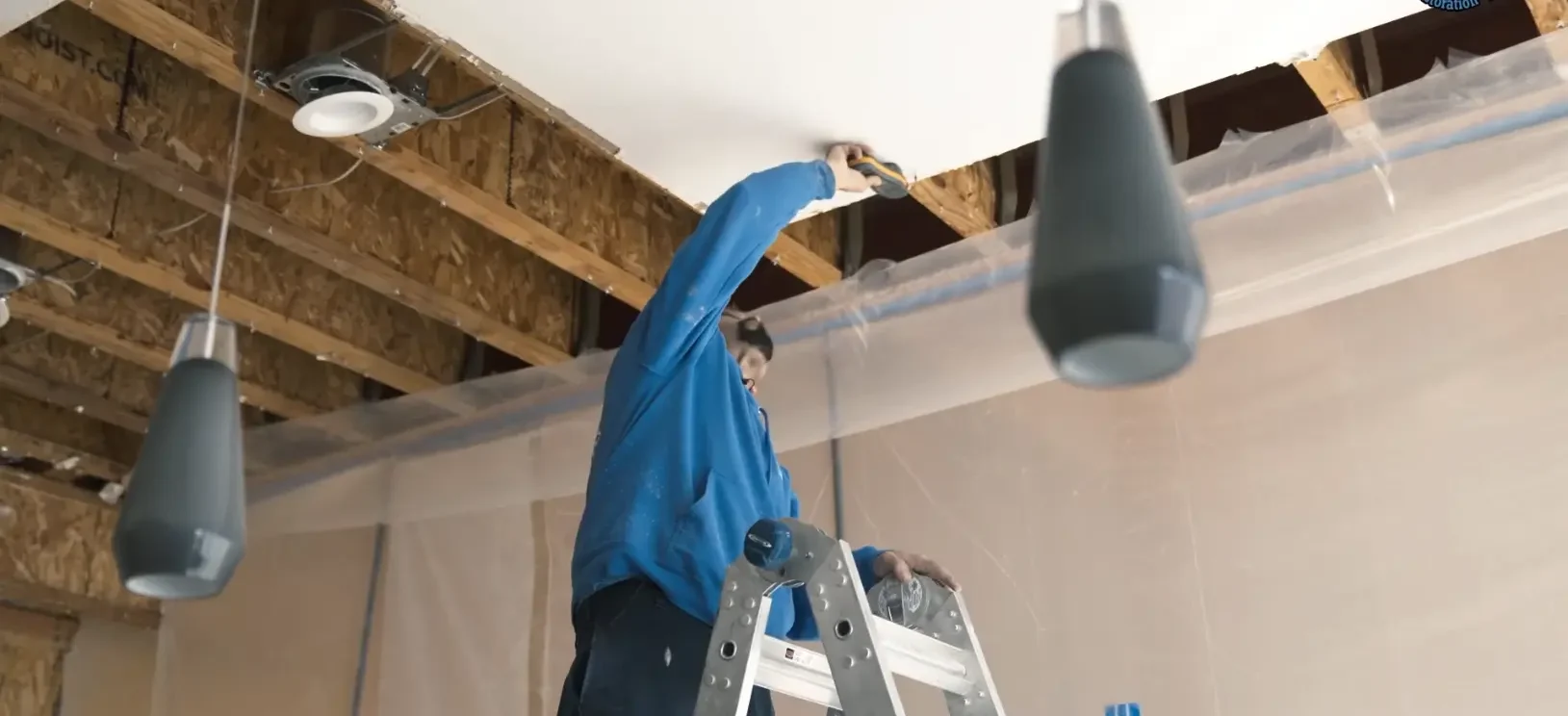
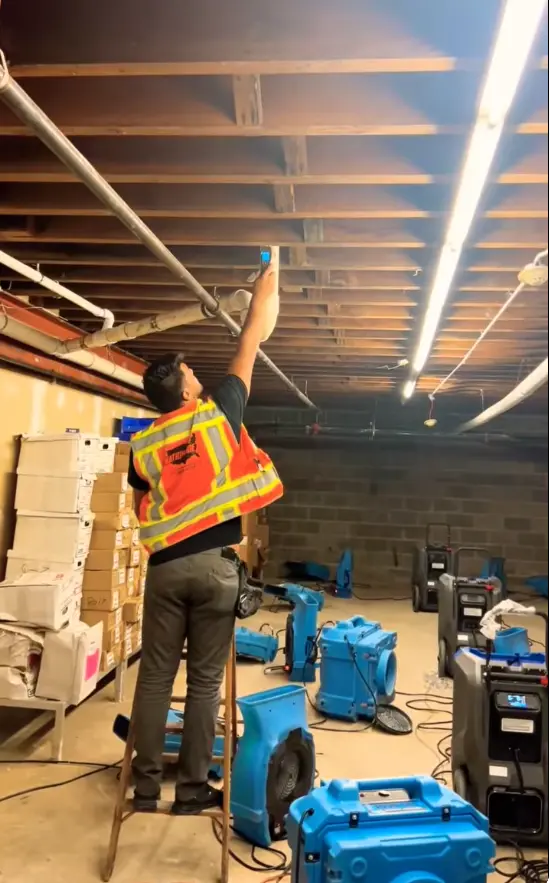
A water damage inspection comes first — technicians walk the property with moisture meters and often a thermal imaging camera, mapping how far water actually traveled, not just where it’s visible. It’s common for a wall to look completely dry while a thermal scan shows the cavity behind it is still saturated. Source control follows immediately, stopping whatever’s still causing the problem before drying work is worth starting.
Classification and Extraction
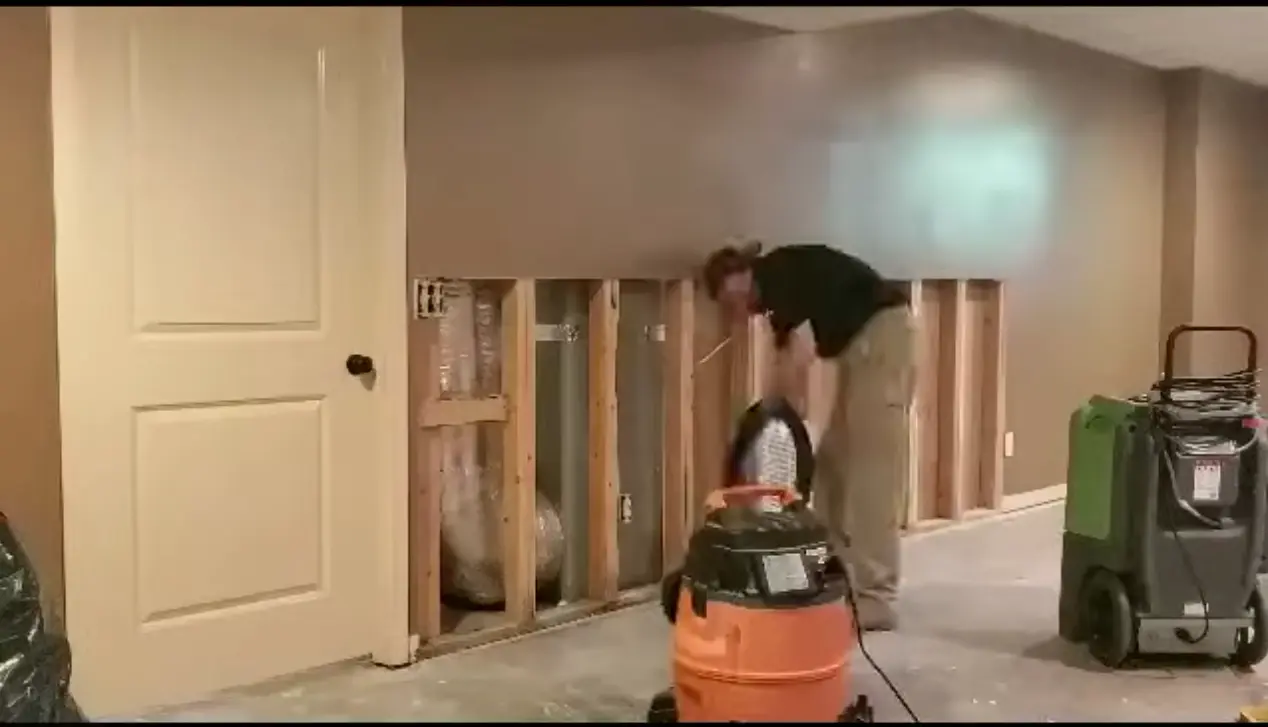
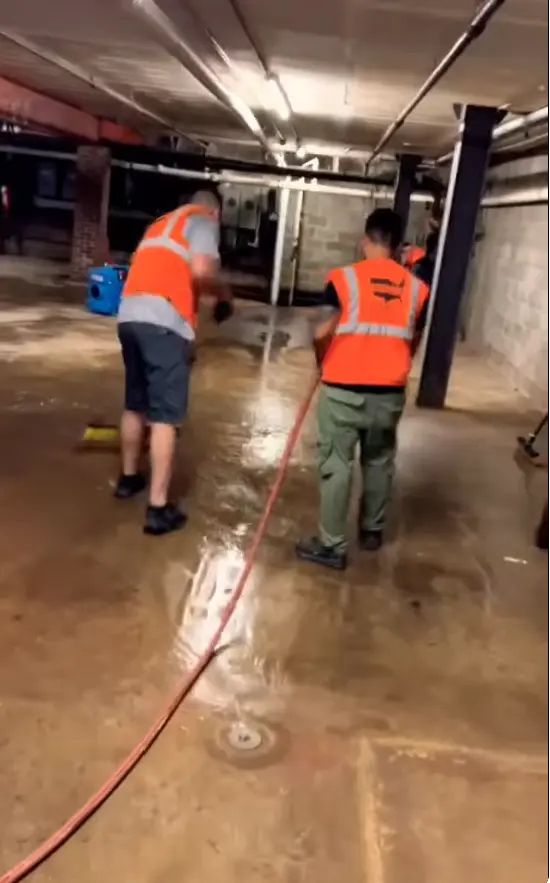
The water gets classified by contamination level and how much material absorbed it, which determines everything downstream. Extraction removes standing water with pumps and industrial wet vacuums — usually the fastest visible progress a homeowner sees.
Drying, Monitoring, Cleaning, and Restoration
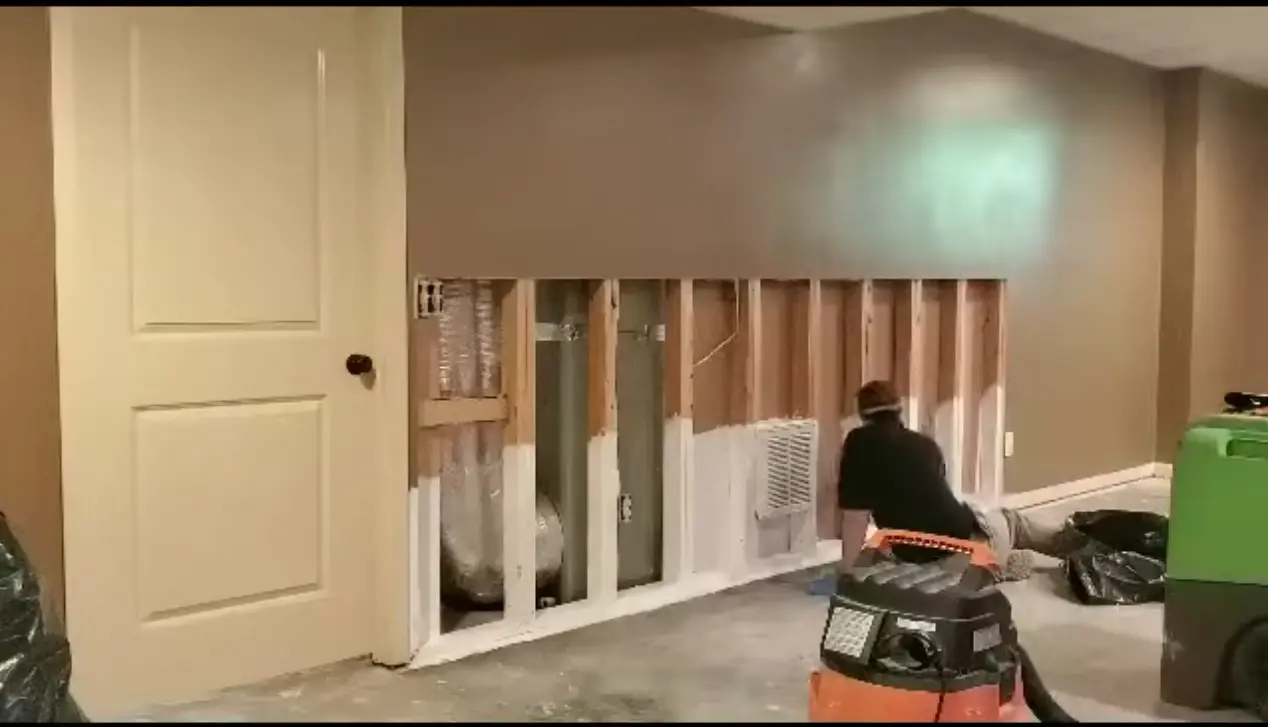
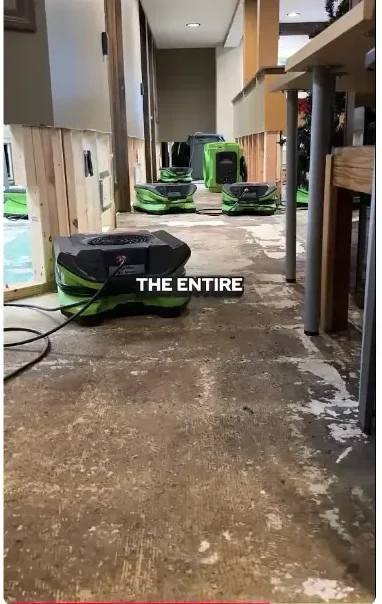
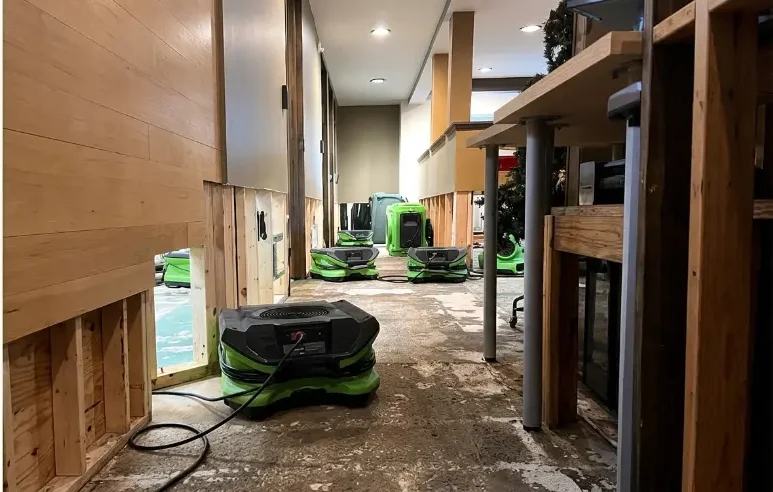
Drying begins with air movers and dehumidifiers running continuously, often for several days. Technicians return for monitoring, checking moisture readings daily. Once everything reads dry against baseline levels, cleaning sanitizes affected surfaces, and restoration rebuilds whatever couldn’t be dried — drywall, flooring, trim — back to pre-loss condition. Companies that handle mitigation and reconstruction under one roof save homeowners from coordinating two separate contractors.
Can Water Damage Hide Behind Walls or Under Floors
How Water Travels Beyond What You Can See
Water doesn’t stay where it lands — it travels along studs, wicks through subfloor seams, and spreads through insulation via capillary action, often ending up several feet from the original wet spot. A wall can feel bone-dry to the touch while the cavity behind it stays saturated for days.
Why Equipment Matters More Than Instinct
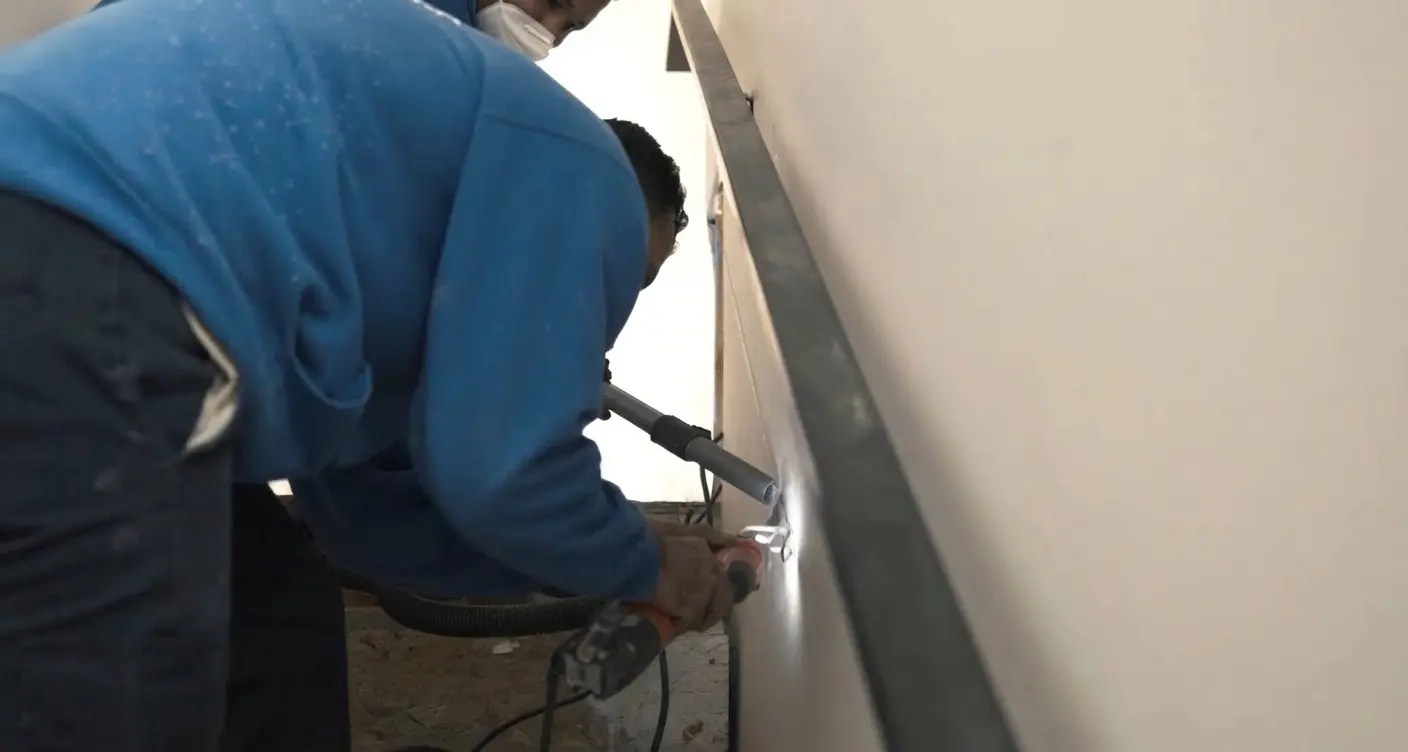
During a water damage assessment, moisture meters and infrared thermal imaging let technicians see what’s happening inside wall cavities, under flooring, and behind cabinetry — none of which a homeowner can check without the right equipment. Mold that shows up weeks after everyone thought the problem was solved almost always traces back to hidden moisture nobody found the first time.
Know the Risk
Water Damage Categories 1, 2 & 3 Explained
Category 1 — Clean Water
Comes from a supply line break, an overflowing appliance, or rainwater. Low-risk if addressed quickly, and the only category where limited DIY cleanup is genuinely reasonable.
Category 2 — Gray Water
Includes washing machine discharge or a sump pump backup. Carries enough contaminants to make people sick, so it calls for more careful handling.
Category 3 — Black Water
Sewage backups, storm-surge flooding, standing water that’s grown bacteria. Requires full protective equipment and a fundamentally different approach to cleanup and disposal.
Water Damage Classes 1–4 Explained
Class 1 and Class 2 — Limited to Moderate Absorption
Class 1 is minimal absorption affecting part of a room. Class 2 means an entire room is affected, including carpet and cushioned flooring, with water wicking up the lower walls.
Class 3 and Class 4 — Heavy Saturation and Specialty Drying
Class 3 is the most water absorbed — typically from an overhead source, soaking walls, ceilings, insulation, and carpet at once. Class 4 covers specialty drying for low-porosity materials like hardwood, plaster, or concrete, which hold moisture stubbornly and take longer to bring to a safe reading.
Pricing Guide
How Much Does Water Damage Restoration Cost in San Diego?
Typical Cost Ranges by Scope
| Scope | Typical Cost Range |
|---|---|
| Minor cleanup (Class 1, small area) | $500 – $1,500 |
| Moderate damage (Class 2, single room) | $1,500 – $5,000 |
| Major damage (Class 3, multiple rooms) | $5,000 – $12,000+ |
| Category 3 / sewage backup | $7,000 – $15,000+ |
| Full structural restoration including reconstruction | $15,000 – $50,000+ |
Actual costs vary based on the extent of damage, materials affected, and whether mold remediation or reconstruction is needed. We offer free on-site assessments and work directly with your insurance company. Any contact or property details you share when requesting a quote are handled as described in our privacy policy.
Why Every Quote Starts With an Inspection
These are general ranges — the only way to get an accurate number is a free on-site inspection, since two jobs that look nearly identical on paper can cost very differently depending on what’s happening behind the walls.
What Makes Water Damage Restoration More Expensive
Response Time Is the Biggest Multiplier
The single largest cost driver is how fast mitigation started — water that sat overnight costs meaningfully more than water caught in the first hour.
Contamination, Scope, and Materials
Category 3 jobs require more labor, protective equipment, and disposal. Square footage and number of rooms scale cost directly, and whether water reached wall cavities or a crawl space adds complexity invisible from a walkthrough. Hardwood and tile cost more to restore than carpet.
Hidden Add-On Costs
Mold remediation on top of initial mitigation, and content restoration for furniture and electronics that need professional cleaning, catch homeowners off guard most often. This is especially true for a San Diego mold damage repair commercial job, where affected square footage and containment requirements can add significantly to the original estimate — a risk-free water damage repair San Diego quote up front helps homeowners avoid that surprise.
How Long Does Water Damage Restoration Take
Extraction and Drying Timeline
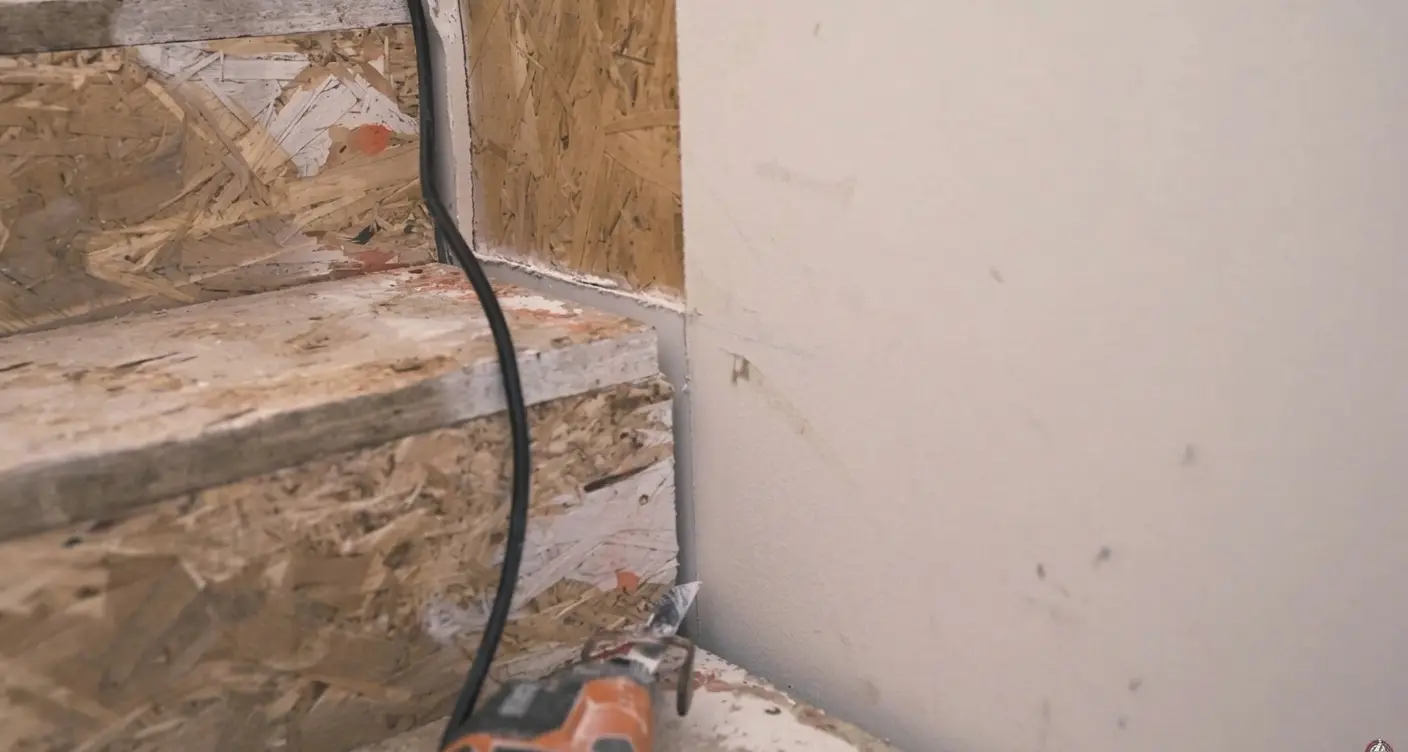
Extraction almost always happens on day one. Structural drying takes 3–5 days for a typical Class 1 or 2 job; Class 3 and 4, with denser materials, can stretch a week or more.
Reconstruction Adds Its Own Timeline
Reconstruction — drywall, flooring, trim, paint — is a separate phase that can add one to three weeks depending on scope and material availability.
What Happens to Drywall, Flooring, Insulation & Contents
Drywall and Flooring
Drywall wet more than 24–48 hours, or touched by Category 2/3 water, typically gets cut out and replaced. Carpet and pad often need replacing after contamination exposure; hardwood can sometimes be saved with slow, controlled drying if caught early.
Insulation and Personal Contents
Once fiberglass or cellulose insulation gets wet, it almost always needs replacing. Furniture, electronics, and documents can frequently be professionally cleaned and dried off-site instead of discarded, depending on category and material.
Water Mitigation vs. Restoration vs. Reconstruction
Three Phases, Three Different Jobs
Mitigation is the emergency response — extraction, drying, stopping further damage. Restoration is cleaning and sanitizing, bringing materials back to pre-loss condition. Reconstruction is rebuilding whatever couldn’t be restored — new drywall, flooring, sometimes cabinetry.
Water Damage and Mold: How Fast Can Mold Develop
The 24-to-48-Hour Window
In San Diego‘s humid coastal climate, mold spores can start colonizing wet materials in as little as 24 to 48 hours — the actual mechanism by which a $1,500 drying job can turn into a $6,000 mold remediation project.
Why This Drives Every Other Decision
Every day of delay meaningfully raises the odds mold remediation becomes a separate line item stacked on top of the original mitigation work.
Does Homeowners Insurance Cover Water Damage in California
What’s Typically Covered
Most California homeowners policies cover sudden, accidental damage — a pipe that bursts without warning, a water heater that fails outright.
What’s Usually Excluded
Gradual leaks that insurers argue the homeowner should have caught are a common reason claims get denied. Flood damage from an external source is excluded from standard policies entirely and needs separate flood insurance. Confirm specifics with your own carrier, and note that the information here is general in nature, as outlined in our disclaimer.
What Should You Document for an Insurance Claim
Evidence to Capture Immediately
Photograph and video everything before cleanup starts. Note the date and time you discovered damage, and the source if known.
Records to Keep Throughout the Claim
A written inventory of damaged belongings with rough values, receipts for emergency mitigation, the restoration company’s inspection report and moisture readings, and a saved record of communication with your insurer.
Can You Clean Up Water Damage Yourself
When DIY Is Genuinely Fine
A small, clean-water spill caught within minutes — towels, a fan, a wet/dry vacuum are genuinely fine.
Where DIY Starts to Break Down
Hidden moisture behind walls is easy to miss without the right equipment, and Category 2 or 3 water shouldn’t be handled without proper protective gear. When in doubt, a same-day professional inspection is small compared to remediating a mold problem from an incomplete dry-out. For a fuller walkthrough of what to expect, see our San Diego water damage restoration guide.
Why Choose a Local San Diego Water Damage Company
Local Knowledge That Franchise Call Centers Miss
A company that works San Diego daily understands things a national call center won’t — how coastal humidity affects drying times, and which older neighborhoods, Kensington and Hillcrest among them, have recurring plumbing issues.
Faster Response, Less Total Damage
A local crew typically reaches a property faster than one dispatched from a regional hub — faster arrival translates directly into less total damage. It’s the same reason a trusted San Diego water restoration company or long-standing water damage San Diego hometown restoration outfit tends to outperform a national call center on response time alone, and why so many families search specifically for a property damage restoration service San Diego team with a local address, not just a local phone number.
How to Choose a Water Damage Restoration Company in San Diego
What to Verify Before You Sign
Confirm real 24/7 availability with a stated response-time estimate, not a vague promise. Verify a valid California contractor’s license and liability insurance, and ask whether technicians are IICRC-certified.
What Separates a Good Company From an Average One
A company that works directly with insurance carriers, provides a written scope of work before starting, handles mitigation and reconstruction under one roof, and has reviews specific to the local branch — not a generic national franchise page. The strongest restoration service San Diego providers and restoration solutions San Diego companies, sometimes operating under names like 911 Restoration of San Diego or similar regional brands, tend to share this same pattern: transparent pricing, licensed technicians, and documentation built for insurance from day one. Whether you’re comparing a certified restoration San Diego firm, a bright restoration company San Diego lists among its top picks, or names like Clean Earth Restorations San Diego, Cutting Edge Restoration San Diego, or D&M Restoration San Diego, the same verification steps apply — check the license, confirm the certification, and read the scope of work before signing.
How to Verify a California Restoration Contractor
Checking the CSLB License
Look up the license number through the California Contractors State License Board (CSLB) website — a legitimate contractor gives you that number without hesitation. Confirm it’s active and check for disciplinary history.
Confirming Insurance and Certification
Verify listed insurance coverage directly. IICRC certification can be checked through the IICRC’s certified-firm lookup tool.
Got Questions?
Frequently Asked Questions
How much does water damage restoration cost in San Diego?
Costs typically run from around $500 for minor cleanup up to $15,000 or more for major Category 3 damage requiring reconstruction, with square footage, contamination level, and response speed driving most of the variation.
Is flood damage restoration different from water damage restoration?
Flood damage restoration specifically deals with Category 3, black-water intrusion from external flooding, which needs more extensive sanitization and typically isn’t covered under a standard homeowners policy without separate flood insurance.
Do water damage restoration companies handle water extraction services directly?
Yes — extraction is usually the first hands-on step, with pumps and industrial vacuums removing standing water before drying begins.
Will my homeowners insurance cover a burst pipe in San Diego?
Sudden, accidental events like a burst pipe are generally covered under standard California homeowners policies, while gradual leaks and external flooding usually aren’t — confirm specifics with your carrier.
How quickly can a restoration crew arrive after I call?
Local San Diego companies with genuine 24/7 emergency service often aim for arrival within 90 minutes to two hours, since that early window is what keeps total damage — and cost — from escalating.
Can I stay in my home during water damage restoration?
For most Category 1 and 2 situations affecting a limited area, yes. Larger Category 3 losses or extensive structural drying sometimes call for temporary relocation.
What We Handle
Full-Service Water Damage Restoration & Related Repairs
Beyond standard water damage restoration service in San Diego, our team also handles the surrounding problems that usually come with it. That means water damage repair San Diego homeowners can rely on for structural fixes, thorough water damage cleanup San Diego crews complete before rebuild work starts, and dedicated water extraction service San Diego properties need the moment a pipe lets go or a storm drain backs up.
When flooding is the cause, we run full emergency flood service San Diego and emergency water damage San Diego response, followed by a proper flood damage inspection San Diego insurers ask for and, where needed, complete flood damage repair San Diego and flood damage cleanup San Diego work from extraction through reconstruction. On the assessment side, our water mitigation San Diego and water removal San Diego teams document everything a claim requires, and our broader water remediation service San Diego and water remediation company San Diego capabilities cover jobs a single mitigation crew can’t finish alone.
Mold rarely shows up alone after a water event, so we also provide mold remediation downtown San Diego and mold removal downtown San Diego service, plus dedicated commercial mold damage remediation San Diego and commercial mold damage restoration San Diego programs for property managers. Where fire or smoke has combined with water damage, our crews also cover fire damage remediation San Diego and San Diego smoke damage restoration as part of the same restoration plan, along with specialty work like crawl space restoration San Diego and repair of water damaged wood San Diego homes commonly need after a slow leak.
For businesses, our commercial water damage repair San Diego and commercial water damage restoration San Diego teams work around operating hours to keep downtime short, and our insurance restoration service San Diego process is built to match what adjusters expect to see on a claim file.
Where We Work
Water Damage Restoration San Diego County — Areas We Serve
As a water damage restoration company San Diego property owners already trust, we cover more than the urban core. Our water damage restoration downtown San Diego crews respond to condo and high-rise properties daily, while water damage specialist San Diego teams handle single-family homes throughout water damage restoration San Diego County — including water damage restoration San Ysidro near the border, La Mesa to the east, and San Marcos in the north county corridor.
We’re also active as a water damage restoration company Escondido CA and provide water mitigation Escondido CA and water damage repair service Escondido for the North County inland corridor. Coastal and North County neighborhoods are covered too — water damage restoration Santee, flood damage restoration Santee, water damage restoration Solana Beach, water damage restoration 4S Ranch, and water damage repair 4S Ranch are all within our regular service radius.
Mold-specific calls follow the same footprint: mold damage restoration Pacific Beach and mold damage restoration service Pacific Beach CA, mold damage restoration Del Mar, mold damage restoration 4S Ranch, and mold damage restoration service Carlsbad, along with mold damage restoration service Hillcrest CA, mold damage restoration service Mira Mesa, mold damage restoration service Mission Valley CA, and mold damage restoration service North Park CA.
Commercial coverage extends countywide as well, with commercial mold remediation San Diego County and affordable commercial mold remediation San Diego County options for multi-unit and business properties that need predictable scheduling and clear documentation.
Property owners outside the county can find the same documented process on our pages for Los Angeles, San Francisco, San Jose, and Phoenix.
More Questions
San Diego Water & Restoration — Common Questions
Can water damage be restored?
In most cases, yes. Category 1 and 2 water damage — clean or lightly contaminated water caught within the first 24–48 hours — is routinely restored through extraction, structural drying, and cleaning. Even more severe Category 3 losses can typically be restored, though materials like soaked drywall, insulation, and carpet padding usually need to be removed and replaced rather than dried in place.
Does San Diego have a water problem?
San Diego imports roughly 85% of its drinking water, mostly from the Colorado River and Northern California, which makes the region vulnerable to drought and rising import costs rather than facing a water quality crisis day-to-day. The city’s Pure Water San Diego program is a direct response to that supply challenge — more on that below.
Do I need a license to do water restoration in California?
Yes. Water damage restoration and mitigation work in California generally requires a contractor to hold an active license through the California Contractors State License Board (CSLB), and reputable companies also carry IICRC certification for their technicians. Always verify a company’s CSLB number before hiring.
What is the Pure Water Project in San Diego?
Pure Water San Diego is the City of San Diego’s advanced water purification program, which recycles wastewater into safe, high-quality drinking water. Phase 1 is designed to produce about 30 million gallons of purified water per day, and the completed program is intended to supply close to half of the city’s water needs locally by 2035, reducing reliance on imported water.
How is the water quality in San Diego?
San Diego’s municipal tap water meets state and federal drinking water standards and is generally considered safe to drink, though like many California cities it can carry a noticeable mineral taste depending on the source blend. Some residents choose filtration for taste preference rather than a safety concern.
What city has the cleanest water in California?
Rankings vary by year and testing methodology, but California cities that draw heavily from protected mountain reservoirs — such as San Francisco, which sources much of its supply from the Hetch Hetchy reservoir — are consistently cited among the state’s cleanest-tasting, highest-quality tap water.
What city has the worst tap water in America?
National rankings shift year to year, but cities that have faced documented, prolonged water-quality crises — most notably Flint, Michigan, following its lead contamination crisis — are the ones most frequently cited in these lists rather than any California city.
What city in California has the best quality of life?
This depends heavily on the ranking criteria used — cost of living, climate, schools, safety, or job market all weigh differently. Coastal and mid-size cities like San Luis Obispo, Carlsbad, and parts of the San Francisco Bay Area regularly appear near the top of California quality-of-life rankings, alongside San Diego itself for its climate and outdoor lifestyle.
What’s the most polluted beach in California?
According to Heal the Bay’s most recent Beach Report Card, Playa Blanca near Tijuana and the Tijuana River Mouth in San Diego County have ranked among the state’s most polluted beaches, driven by cross-border sewage and wastewater issues. The Santa Monica Pier has also repeatedly ranked among California’s most polluted beaches due to chronic bacteria levels from urban runoff.