Water Damage Restoration in San Diego: What Homeowners Need to Know
What Water Damage Restoration Actually Involves
Water Damage Is More Than Visible Water
Water damage restoration San Diego homeowners search for usually starts with one visible problem — a puddle on the kitchen floor or a dark stain on the ceiling — but the water you can see is rarely the whole story. Water moves along the path of least resistance — under baseboards, through drywall seams, into subfloor and insulation — long after the surface looks dry.
That’s why a floor can feel completely dry to the touch while the plywood underneath is still saturated, and why a wall can look untouched while the cavity behind it is holding moisture that will eventually show up as a soft spot, a musty smell, or mold. Proper water damage restoration San Diego professionals rely on starts from the assumption that visible damage is only part of the picture, and that walls, flooring, subfloor, cabinets, and insulation all need to be checked before anyone calls a job finished.
Restoration, Mitigation, Extraction, Drying and Reconstruction Are Different
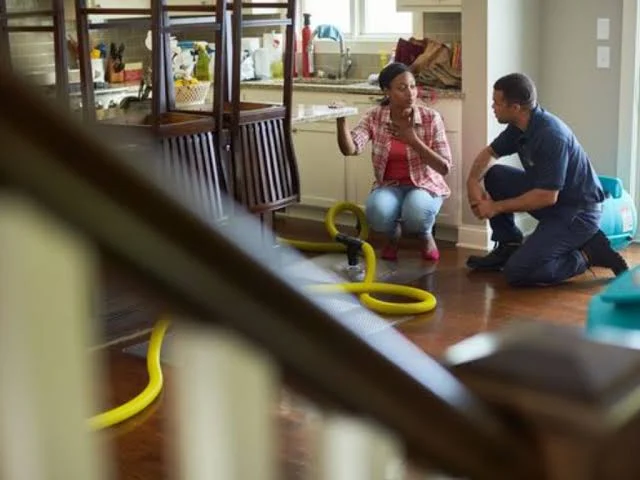
These words get used interchangeably by homeowners, but they describe separate stages of the same job, and knowing the difference helps you understand exactly what a water damage restoration company is billing you for.
Mitigation is the emergency response — stopping the source and preventing the damage from getting worse. Water extraction is physically removing standing water with pumps and vacuums. Structural drying uses air movers and dehumidifiers to bring wet materials back down to a normal moisture level.
Cleaning and restoration sanitizes and treats what was affected. Repair and reconstruction is the rebuilding phase — new drywall, flooring, or trim where materials couldn’t be saved. A crew that stops at extraction hasn’t finished a real water extraction and restoration job — drying, monitoring, and often reconstruction still follow.
Why Identifying the Water Source Matters
Every response decision — what to remove, how urgently to act, what protective equipment is needed — depends on where the water came from. A supply-line break behaves differently than a slow roof leak, which behaves differently than a sewage backup. Plumbing leaks and appliance failures usually involve clean or lightly contaminated water. Roof or exterior intrusion often brings in dirt and debris along with the water. Sewage and wastewater carry contamination that changes the entire cleanup approach. Stormwater and floodwater can carry chemicals, bacteria, or sediment from outside the property. Concealed leaks — the ones running behind a wall for weeks before anyone notices — are their own category, because by the time they’re found, the exposure time is already long. Source identification is the foundation any proper water mitigation plan is built on.
What to Do Immediately After Water Damage in San Diego
Stop or Control the Water Source When It Is Safe
If the water is coming from a supply line, fixture, or appliance, shutting off the source is usually the single most useful thing you can do before help arrives. Most homes have a main shutoff valve near the street-side water meter or where the main line enters the house, and many fixtures have their own local shutoff as well. If you can’t locate the source, or shutting it off would mean working around standing water near electrical outlets, that’s the point where this stops being a DIY task and becomes something a plumber or a restoration professional should handle.
Address Electrical and Other Safety Hazards
Standing water and electricity are a genuinely dangerous combination — if water has reached outlets, switches, or appliances, cut power to that area at the breaker rather than stepping into it. Floodwater and sewage backups carry their own contamination risk, so treat any water you’re not certain is clean as something to avoid direct contact with. HVAC systems that have drawn in moisture or contaminated air should be shut off rather than run, since that can spread the problem to unaffected rooms. If the water is extensive, contaminated, or has compromised electrical systems, occupants — especially children, older adults, or anyone with respiratory sensitivities — are often better off leaving the affected area until it’s been assessed.
Document the Damage Before Major Cleanup
Whatever you plan to do next — file an insurance claim, hire a contractor, or both — documentation done before cleanup starts is worth far more than anything captured afterward. Photograph and video every affected room, the visible source if you can identify it, and any damaged materials or belongings. Keep receipts for anything you buy for emergency mitigation, and hold onto records from whoever you call in, since insurers and any water damage cleanup company you hire both rely on that early documentation later.
When DIY Cleanup May Not Be Appropriate
There’s no single rule that applies to every situation, but a few factors tend to push a job past what’s reasonable to handle yourself: a large volume of water rather than a small spill, any uncertainty about contamination, water that’s been sitting for more than a couple of hours, electrical risk, or any sign the water reached wall cavities, subfloor, or a crawl space. Structural concerns — sagging ceilings, buckling floors — are an automatic call to a professional. None of this means every water event needs an emergency crew; it means the decision should be based on these specific factors rather than a guess.
How Water Damage Restoration Works
1. Initial Assessment and Inspection
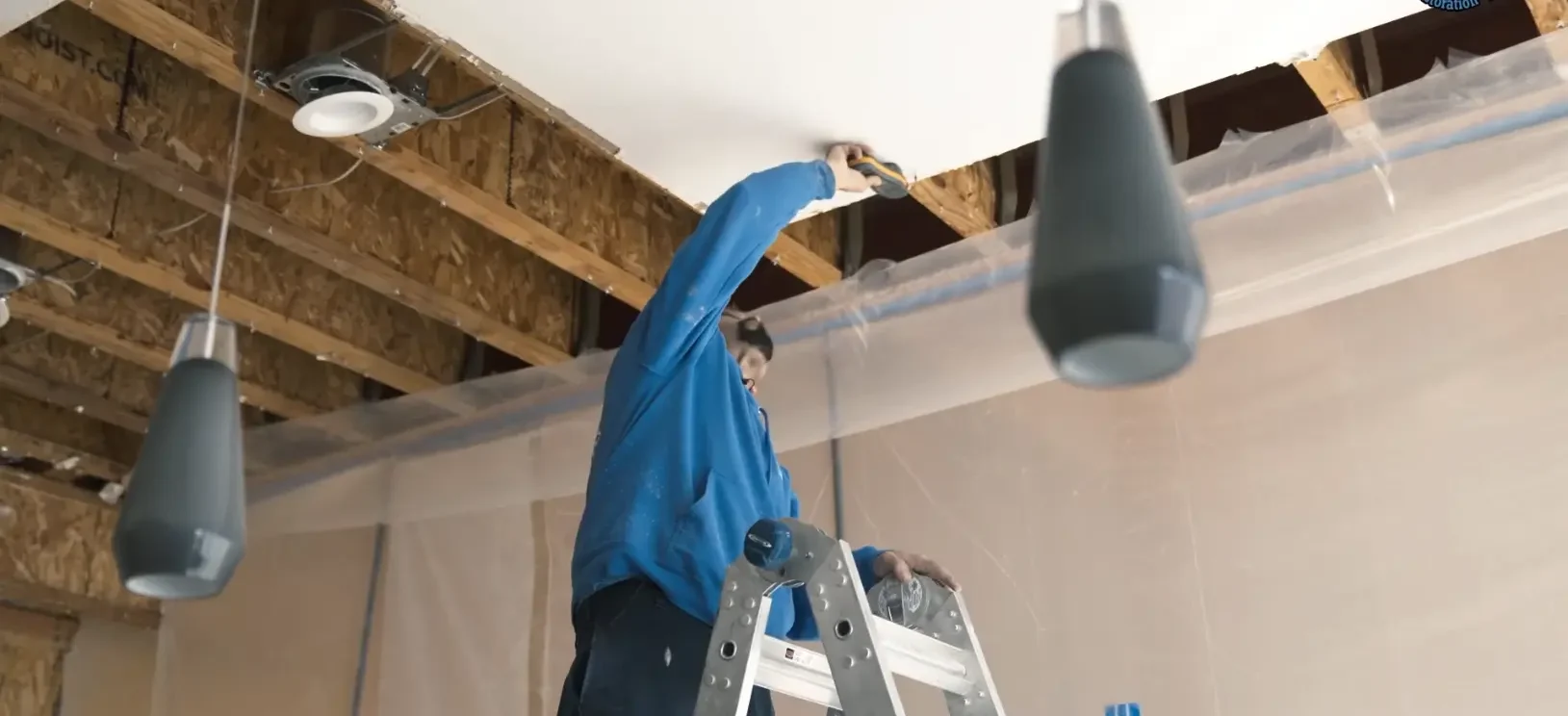
A proper job starts with a walkthrough that identifies the water source, maps which areas were affected, and evaluates the building materials involved. This is where the difference between visible and hidden moisture starts to matter — technicians typically use moisture meters and often thermal imaging to see how far the water actually traveled, not just where it’s obviously wet. That inspection sets the scope for everything that follows.
2. Water Extraction
Extraction is the physical removal of standing or pooled water using pumps and industrial wet vacuums. It’s usually the fastest, most visible progress in the entire process — but extraction only removes liquid water sitting on a surface. It doesn’t address the moisture that’s already been absorbed into flooring, drywall, or subfloor, which is why extraction and drying are treated as two separate steps of any thorough water extraction service rather than one.
3. Structural Drying
Once standing water is gone, the drying phase begins — air movers create controlled airflow across wet surfaces, and dehumidifiers pull moisture out of the surrounding air so materials can actually release what they’ve absorbed. How fast this works depends on airflow, humidity, temperature, and how much moisture the material is holding, which is part of why drying timelines vary from job to job.
4. Moisture Monitoring
This is the step that separates a properly finished job from one that only looks finished. Equipment alone doesn’t prove a space is dry — technicians take moisture readings in affected materials and track them over multiple visits, comparing progress against baseline levels and against unaffected materials elsewhere in the structure. A wall can feel dry to the hand while its internal moisture reading is still elevated. Monitoring is what confirms the material has actually returned to a normal, stable moisture level rather than just appearing dry on the surface.
5. Cleaning and Restoration
Once materials are confirmed dry, cleaning addresses anything the water left behind — contamination, residue, odor. This is also where the salvageable-versus-unsalvageable decision gets made for materials and contents, based on what they were exposed to and how long they were wet, not on a blanket rule.
6. Repair and Reconstruction
Whatever couldn’t be dried or cleaned moves into reconstruction — replacing drywall, flooring, trim, or cabinetry. It’s worth understanding that mitigation and reconstruction are related but distinct stages, sometimes handled by the same water damage repair team and sometimes requiring a separate contractor, depending on how the original company is set up.
How Professionals Determine What Can Be Saved
Material Type Matters
Different materials hold up to water very differently. Drywall wicks moisture quickly and loses structural integrity if it stays wet too long. Flooring, carpet, and padding respond differently depending on the material — hardwood can sometimes be saved with slow, controlled drying, while carpet padding exposed to contaminated water usually can’t. Wood cabinets, insulation, subfloor, and contents like furniture or electronics each have their own tolerance for water exposure and their own restoration approach.
What Factors Affect the Save-or-Remove Decision?
The decision isn’t based on how something looks — it comes down to the water source, contamination level, the material’s own characteristics, how long it was wet, its current moisture condition, whether it can realistically be dried or cleaned, and how extensive the damage is. Two rooms that look similarly damaged can have very different outcomes once these factors are actually assessed.
Why Immediate Demolition Is Not Always the Same as Restoration
Tearing out materials quickly can feel like progress, but removing something before it’s been properly assessed isn’t the same as restoring it — and it can end up costing more if materials that could have been dried and saved are removed unnecessarily. The right approach is assessment first, then a decision based on the evidence, not a default toward demolition.
Hidden Water Damage: What Homeowners May Not See
Where Hidden Moisture Can Remain
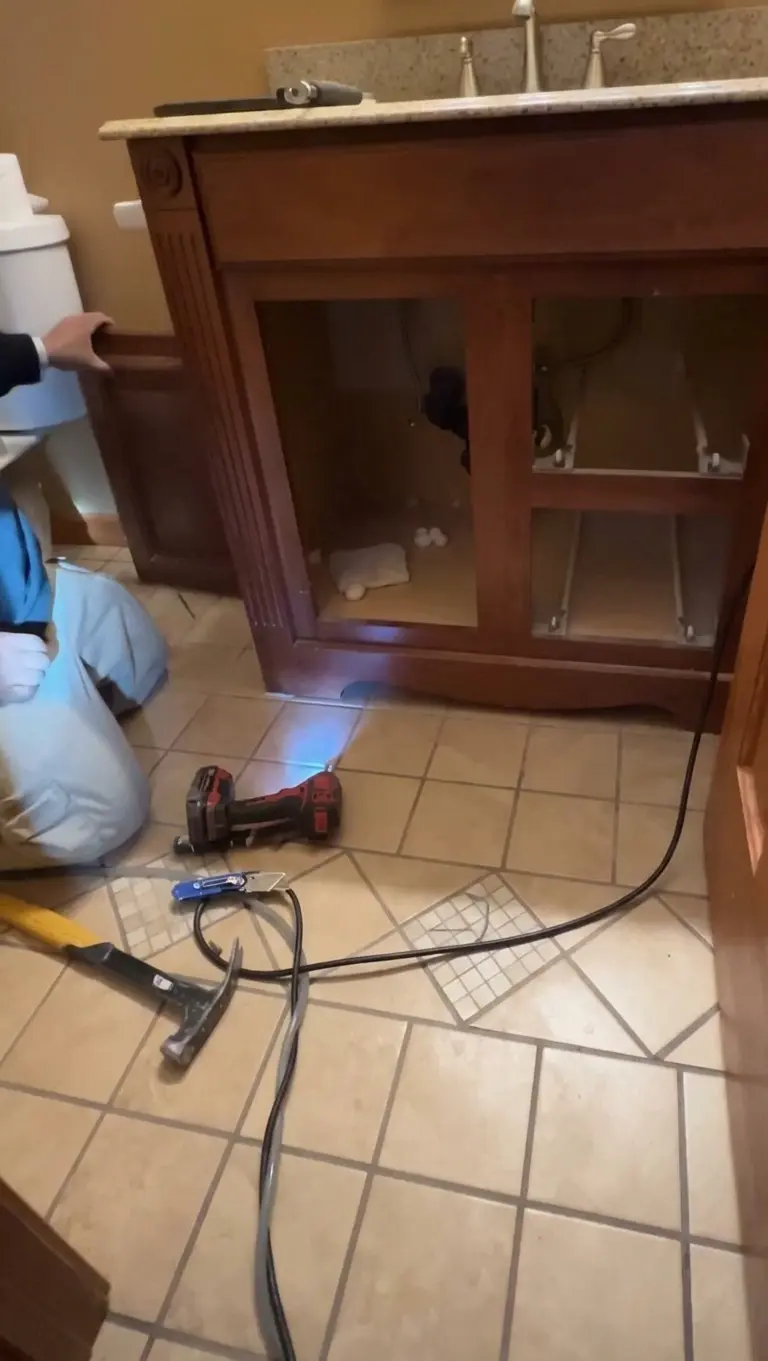
Moisture has a way of ending up in places that never looked wet in the first place — behind walls, under flooring, beneath carpet and padding, inside cabinets, around baseboards, and in crawl spaces. Any of these can hold moisture for weeks after the visible cleanup is done, quietly creating the conditions for mold to take hold.
How Moisture Can Be Investigated
Moisture meters give a direct reading of how much water a material is holding. Visual inspection catches staining, warping, or discoloration that suggests a problem. Thermal imaging is a useful investigation aid — it can flag temperature differences that suggest moisture behind a surface — but it’s a tool that points technicians toward areas worth checking with a moisture meter, not a standalone proof of dryness on its own.
Why “The Floor Looks Dry” Does Not Always End the Investigation
Visible condition is the start of the process, not the end of it. The sequence that actually confirms a space is safe runs from visible condition, to moisture investigation, to drying, to monitoring, to verification — skipping any one of those steps is how a job that looked complete ends up with a mold problem weeks later.
How Long Does Water Damage Restoration Take?
Why Restoration Time Varies
There’s no single number that applies across every job, because timeline depends on how much water was involved, where it came from, whether it was contaminated, what materials were affected, how large the affected area is, current moisture levels, environmental conditions like humidity, and whether repairs are needed afterward. Two jobs that look similar on day one can finish weeks apart depending on these factors.
Drying Time vs Total Restoration Time
Drying and complete restoration are not the same milestone. Drying refers to bringing moisture levels back to normal — once that’s confirmed, cleaning and any necessary reconstruction still have to happen before the job is actually finished. Hearing “we’re done drying” doesn’t mean the whole project is complete.
What Can Delay Completion?
Common delays include water that’s still actively intruding rather than fully stopped, hidden moisture that wasn’t caught in the first inspection, materials that turn out to need replacement rather than drying, required demolition, the plumbing or roof repair that has to happen before drying can even start, and the back-and-forth of insurance documentation. None of these are unusual — they’re just part of why estimates are ranges rather than fixed dates.
Mold and Water Damage: What Homeowners Should Understand
Why Moisture Control Matters
Mold needs moisture to grow, which is why controlling moisture — not just removing visible water — is the actual objective of the drying and monitoring phases. The EPA’s guidance on mold prevention centers on this same point: manage moisture and you manage mold risk, which is why mold remediation and water restoration are so closely linked in practice.
Why the 24–48 Hour Guidance Needs Context
It’s common to hear that mold “always” starts after 48 hours, but that’s an oversimplification. The EPA recommends drying wet or damp areas and items within 24 to 48 hours after a leak or spill specifically to help prevent mold growth in most situations — it’s guidance for how quickly to act, not a guaranteed countdown clock. Actual mold onset depends on humidity, temperature, and how completely the area was dried, so the honest takeaway is: act quickly, don’t assume a fixed timeline.
Hidden Moisture and Mold Risk
The connection is straightforward — water that isn’t fully addressed becomes moisture that lingers, and moisture that lingers because drying was incomplete creates the conditions mold needs. This is exactly why hidden moisture behind walls or under flooring is treated as seriously as visible water.
Why “Black Mold” Should Not Be Used as a Catch-All Term
Mold comes in a range of colors, and color alone doesn’t identify the species or tell you how serious it is. Treating any dark-colored mold as automatically “toxic black mold” isn’t accurate, and unsupported toxicity claims aren’t something a homeowner should rely on when making decisions. If mold is found, identification and next steps should come from an actual assessment rather than a guess based on appearance.
When Additional Mold Assessment May Be Relevant
If drying and monitoring didn’t fully resolve a moisture problem, if there’s a persistent musty odor with no visible source, or if occupants are experiencing symptoms that seem tied to a specific area of the home, a dedicated mold assessment can be a reasonable next step — evaluated on those specifics rather than assumed by default.
Different Types of Water Damage Require Different Responses
Plumbing Water
Supply-line failures, pipe leaks, appliance leaks, and water heater failures are among the most common sources homeowners deal with. This water usually starts clean, but the response still needs to move quickly, since even clean water left sitting can become a bigger problem within a day or two.
Sewage or Wastewater
Sewage backups carry real contamination risk and need to be treated with appropriate caution — protective equipment, careful containment, and a cleanup approach built around the contamination rather than the way clean water would be handled. This isn’t a category where shortcuts are worth the risk.
Stormwater and Floodwater
Water that enters from outside the property — through flooding or heavy stormwater intrusion — can carry contaminants picked up from the surrounding area, which changes both the safety considerations and the cleanup process compared to an interior plumbing failure. This is where flood damage restoration differs meaningfully from a standard clean-water job.
Roof or Exterior Water Intrusion
When water is entering from a roof leak or another exterior source, restoring the interior damage without addressing the actual entry point just means the same damage happens again after the next rain. The source has to be fixed, not just the symptoms inside.
San Diego Water Damage: Why Local Context Matters
San Diego Has Multiple Distinct Community Planning Areas
San Diego isn’t a single uniform area — it’s organized into a number of distinct community planning areas, each with its own housing stock, terrain, and infrastructure history. That matters for water damage because older neighborhoods with aging plumbing behave differently than newer developments, and canyon-adjacent or low-lying areas carry different water-related considerations than neighborhoods further from natural drainage paths.
Flood-Prone Areas and Water-Damage Context
Certain parts of San Diego, including areas along Mission Valley, Sorrento Valley, sections near the Chollas Creek watershed, and the Tijuana River Valley, have documented flood-risk characteristics tied to their location along waterways or low-lying terrain. That doesn’t mean these areas automatically see more restoration demand than anywhere else — flooding and everyday water damage, like a burst pipe or appliance failure, are largely independent issues — but it’s useful context for homeowners in these areas who want to understand their property’s flood exposure specifically.
San Diego Flood Maps Can Change
FEMA has finalized a Physical Map Revision for the City of San Diego, with the updated flood risk maps taking effect March 3, 2026. This update can shift flood zone boundaries and base flood elevations in either direction — some properties may newly fall inside a flood zone, and others may be removed from one. Homeowners who want to know where their property stands should check the City’s updated flood maps directly rather than relying on where the lines used to be.
City Infrastructure vs Private Property Water Damage
It’s worth understanding the line between municipal responsibility and private responsibility. City-owned water and stormwater infrastructure, and public sewer lines, are managed by the municipality. Private plumbing inside your home, and the sewer lateral connecting your property to the main line, are typically the homeowner’s responsibility. Knowing which category a given problem falls into affects who you’d contact first and how a claim, if any, would be handled.
What San Diego Homeowners Should Look for in a Water Damage Restoration Company
Verify the Business Identity
Before hiring anyone, confirm the basics: a complete business name, a real physical or business address, a working phone number, an actual website, and consistency across all of it. A company that’s cagey about any of this is worth a second look before you let them into your home.
Check Applicable Licensing and Credentials
California contractor licensing, IICRC certification, and general business registration are three different things, and it’s worth understanding what each one actually verifies. A California contractor’s license is issued through the CSLB and can be checked directly on their site. IICRC certification is an industry training credential specific to restoration technicians, checkable through the IICRC’s certified-firm lookup. Business registration just confirms the company is legally operating — it says nothing about restoration competency on its own. Ask any candidate which of these they actually hold, and verify it rather than taking their word for it.
Ask How Moisture Is Measured and Monitored
This is one of the most useful questions a homeowner can ask, because the answer reveals whether a company actually follows a monitoring process or just estimates when a job “looks” done. Worth asking directly: What areas will be inspected? How will moisture be measured? How will drying progress be tracked over the course of the job? And how, specifically, will they determine the job is complete?
Understand What the Estimate Includes
Estimates can vary widely in what they actually cover. Confirm whether a quote includes extraction, drying, any necessary material removal, cleaning, documentation for insurance purposes, and repairs or reconstruction — or whether some of those are treated as separate line items added later. Knowing this upfront avoids surprises once the job is underway.
Understand Who Handles the Underlying Cause
A restoration company addresses the water damage itself, but the underlying cause — a failed pipe, a roof leak, faulty wiring near the affected area — may fall to a plumber, roofer, electrician, or reconstruction contractor depending on the situation. Some restoration companies coordinate this directly; others expect the homeowner to bring in a separate specialist. Either is normal, but it’s worth knowing which applies before the job starts.
Water Damage Restoration and Homeowners Insurance
Does Homeowners Insurance Cover Water Damage?
There’s no single yes-or-no answer here — coverage depends on your specific policy, the cause of the loss, and any applicable exclusions. Sudden, accidental events are generally treated differently than gradual damage, and flood damage from an external source typically isn’t covered under a standard policy at all — see the III’s guide to water damage and homeowners insurance for a general overview. The only reliable answer for your situation comes from your own policy and your carrier.
What Should Homeowners Document?
Photos and video of the damage before cleanup, a record of damaged contents and their locations, receipts for anything purchased for emergency mitigation, restoration records and moisture logs from whoever you hire, any estimates you receive, and a saved record of your communications with the insurance company. This is the same documentation an adjuster will want to see.
Restoration Company vs Insurance Company
These are two separate parties with two separate roles. The restoration company physically addresses the damage. The insurance carrier or adjuster evaluates the claim and determines what’s covered. A restoration company can help document a job for the claims process, but it isn’t the entity that decides what gets paid.
Why Coverage Should Not Be Guaranteed by a Restoration Company
Any company that promises your insurance will definitely cover a given job before your claim has actually been reviewed is making a claim it can’t back up — coverage decisions belong to the insurer, not the contractor. A trustworthy company will document thoroughly and support the claims process, but won’t promise an outcome that isn’t theirs to promise.
Common Water Damage Restoration Mistakes
Waiting Too Long to Address Water
Delay is consistently the biggest factor in how much a job ends up costing and how complicated it becomes — water that sits overnight is a different job than water addressed within the first hour.
Assuming Visible Water Is the Entire Problem
Treating the puddle as the whole issue, rather than checking what’s underneath and behind it, is how hidden moisture and later mold problems get missed.
Using Fans Without Understanding Moisture Conditions
Pointing a fan at a wet area can help with surface moisture, but it doesn’t address saturated material underneath, and it can sometimes push moisture into areas that weren’t previously affected.
Ignoring Carpet Padding or Subfloor
Carpet can look and feel dry on the surface while the padding underneath stays saturated — it’s one of the most commonly missed sources of ongoing moisture and odor.
Treating All Water Sources the Same
Clean water, gray water, and contaminated water each call for a different response — applying a clean-water approach to a contaminated situation is a safety issue, not just a quality one.
Turning HVAC/Electrical Equipment On Without Considering Safety
Running HVAC or electrical equipment in or near an affected area before it’s been checked can spread contamination or create an electrical hazard.
Removing Materials Without First Understanding the Damage
Tearing out drywall or flooring before an actual assessment can mean removing material that could have been saved — or missing damage that the removal should have addressed in the first place.
Assuming Insurance Will Automatically Pay
Coverage depends on the specifics of the policy and the cause of loss — assuming a claim will be approved without checking can lead to costly surprises.
Choosing a Contractor Based Only on a Marketing Claim
A polished ad or a confident sales pitch isn’t the same as verified licensing, real certification, and a track record you can actually check.
Questions to Ask Before Hiring a Water Damage Restoration Company
Questions About Inspection
What areas will you inspect, and what tools will you use to check for hidden moisture beyond what’s visible?
Questions About Moisture and Drying
How will you measure moisture levels, and what reading has to be reached before you consider an area fully dry?
Questions About Equipment
What equipment will be used for extraction and drying, and how long will it typically stay on-site?
Questions About Damaged Materials
How will you decide what can be dried and saved versus what needs to be removed and replaced?
Questions About Documentation
What documentation will I receive, and will it include moisture logs suitable for an insurance claim?
Questions About Insurance
Do you work directly with insurance carriers, and what happens if my claim is only partially approved?
Questions About Repairs and Reconstruction
Do you handle reconstruction yourselves, or will I need a separate contractor once mitigation is complete?
Questions About Licensing and Credentials
Can you provide your CSLB license number and confirm your technicians’ IICRC certification so I can verify both directly?
Related Reading
If you’re dealing with a specific situation right now, these pages go deeper on individual services and areas we cover across San Diego County: Emergency Water Damage San Diego, Water Damage Inspection San Diego, Water Damage Assessment San Diego, Water Damage Repair San Diego, Water Damage Cleanup San Diego, Water Extraction San Diego, Water Mitigation San Diego, and Water Damage Remediation San Diego. We also serve La Mesa, San Marcos, Del Mar, and Carlsbad.
To learn more about AWM Water Damage Restoration and who you’d be working with, visit our about page.