Sewage Cleanup San Diego
If sewage has backed up into your property, keep people and pets away, avoid contact with the water, stay out of standing water near electrical equipment, and only stop the source if you can do it safely. The sewage cleanup San Diego property owners need goes beyond removing water: it includes removal, cleaning, decontamination, drying and verification. Need emergency water damage help? Call now.
On This Page
First Few Minutes
What to Do Immediately After a Sewage Backup in San Diego
Safety comes first, before any sewage cleanup San Diego crew begins work. None of these steps requires touching the sewage.
Keep people and pets away
Children, pets and anyone with open cuts or a weak immune system should stay out of the area.
Avoid contact and electrical hazards
Don’t wade into standing sewage to reach outlets, panels or appliances. If electrical equipment is wet, leave it alone and get help.
Address the source only if it’s safe
Stop using toilets, sinks and showers so no more wastewater enters. Don’t try to clear a main line yourself.
Document from a safe distance
Photograph and video affected rooms and standing water without stepping into them.
If you must enter
- Rubber boots, gloves and goggles
- A waterproof bandage over any cut
- Wash hands thoroughly afterward
Call a professional when
- Sewage is active or still rising
- Wastewater covers a living area
- Several rooms are affected
- Water reached walls, floors or electrical equipment
Who Is Responsible: Your Plumbing, Your Lateral or the City?
Sewage leaves your building through your plumbing, then a private pipe called the sewer lateral, then the public sewer main. Who is responsible depends on where the problem is.
Property plumbing
Drains, toilets and pipes inside and under your building.
Private sewer lateral
According to City of San Diego policy, the owner maintains the lateral up to the sewer main.
Public sewer main
The City’s wastewater system. A blockage there is different from one in your lateral.
Sewer spill
A release from the sewer system, often reported to the City, which can differ from a backup inside your property.
A licensed plumber can tell you where the blockage is. For official information, see the City of San Diego Public Utilities Department.
What Causes Sewage Backup in a San Diego Property?
A common cause is not a confirmed cause. Only an inspection of your lines shows what happened at your property, and the cause also shapes the sewage cleanup San Diego properties need afterward.
Blocked sewer line
Several drains slow or gurgling at once. Confirmed by camera inspection.
Grease buildup
Repeated slow drains, especially the kitchen.
Tree roots
Recurring blockages in the same line. Confirmed by camera.
Damaged or broken pipe
Backups that return after clearing.
Sewer lateral problem
An aged or offset lateral can fail between building and main.
Toilet or drain overflow
Only one fixture affected.
Heavy rain
Stormwater entering the system can strain it.
Septic problems
A full or failing system can back up. A septic professional assesses it.
Is Sewage Water Dangerous?
It can be. Sewage can carry bacteria, viruses and parasites, and the risk comes mainly from direct contact and contaminated surfaces. That doesn’t mean every exposure causes illness. Raw sewage comes from the public sewer line and septic wastewater from a private tank, and both need careful handling. Heavily contaminated water is often called blackwater in the industry. Sewage mixed with outside floodwater is covered on our flood damage restoration page.
Direct exposure
Wash skin, eyes and mouth contact with soap and clean water.
Wounds
Cover cuts with a waterproof bandage.
Children and pets
Keep them out. They touch surfaces and their mouths.
Belongings
Items that touched sewage may need cleaning or disposal.
Anyone who feels unwell after exposure should speak to a health professional. The EPA’s guidance on moisture and mold is also useful.
Assessment
Sewage Cleanup Inspection and Assessment
A water damage inspection looks at where the wastewater came from, which rooms it reached and how far contamination spread. You can also request a water damage assessment.
The outcome for each material depends on contamination, exposure time, condition and whether it can actually be cleaned.
The Process
Sewage Cleanup San Diego Process: 11 Steps
A professional sewage cleanup San Diego job typically follows these eleven steps. Removing visible wastewater alone doesn’t mean the property is restored.
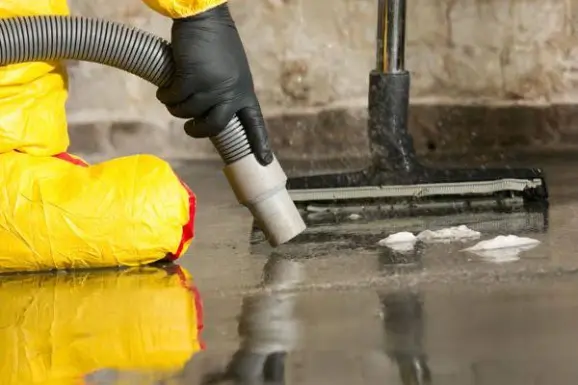
Safety and containment
Protective equipment and a limited work area stop contamination spreading.
Remove standing sewage
Pumps and extraction equipment remove bulk wastewater.
Remove contaminated debris
Solids and debris are removed and bagged.
Evaluate affected materials
Porosity, exposure and condition decide keep or remove.
Remove what can’t be restored
Items that can’t be cleaned or dried can hold contamination, so they go.
Clean affected surfaces
Thorough cleaning comes first, because disinfectants work on cleaned surfaces.
Decontaminate suitable surfaces
Disinfection reduces remaining microorganisms on surfaces that can be treated.
Dry the structure
Air movers and dehumidifiers remove moisture that stays behind after the water is gone.
Monitor moisture
Repeated readings track drying, so it isn’t assumed.
Verify cleanup and drying
Final checks and documentation confirm the work is complete.
What Happens to Materials After Sewage Contamination?
In sewage cleanup San Diego jobs, not every contaminated material is thrown out. Decisions depend on porosity, exposure, condition and whether the item can be cleaned and dried.
Drywall
Porous, so often removed if soaked. Limited cases are judged on inspection.
Carpet and padding
The pad is usually the harder part to save.
Hardwood and subfloor
Depends on how deeply water absorbed and whether it can dry.
Insulation
Usually removed when wet with sewage.
Cabinets
Cleanable surfaces may stay. Hidden moisture behind them is checked.
Furniture and belongings
Hard, non-porous items clean more easily than upholstered ones.
Structural Drying, Odor Removal and Mold Risk
Visible water removal is not complete drying. Water soaks into flooring, wall cavities, cabinets and wood, and that hidden moisture causes later problems.
Air movement and dehumidification
Fans and dehumidifiers pull moisture out of materials and the air.
Monitoring and verification
Readings are repeated over several visits and compared before anything is rebuilt.
Odor
A lingering smell usually means contamination or moisture is still present. Masking isn’t removing the source, and permanent elimination can’t be promised.
Mold
Sewage doesn’t automatically cause mold, but materials that stay wet can. If you suspect it, inspection comes first, then water damage remediation where appropriate.
How Long Does Sewage Cleanup Take in San Diego?
There is no honest universal number for sewage cleanup San Diego jobs. The stages are response, assessment, removal, cleaning, drying and restoration, and each runs on its own clock.
See how a full job is laid out in our water damage restoration guide. Results depend on the property, and no outcome is guaranteed.
How Do You Know Your Sewage Cleanup San Diego Job Was Done Properly?
- The source has been addressed
- Wastewater and contaminated debris are removed
- Affected materials were evaluated and required ones removed
- Surfaces were cleaned and appropriately decontaminated
- Hidden moisture was assessed and drying verified
- Restoration needs are identified in writing
If the backup happens again
Cleanup deals with the damage, and fixing the source deals with the cause. A repeat backup often points to roots, a damaged line, a lateral problem or septic trouble.
Preventing future backups
- Keep grease out of drains
- Address slow drains early
- Have sewer lines inspected when appropriate
- Manage tree roots near lines
- Consider backflow prevention where appropriate
Sewage Cleanup and Insurance in California
Coverage depends on your policy. Sewer backup and flood may be treated differently, and endorsements and exclusions change the answer. Ask your insurer rather than assume.
Document
Photos, videos, dates, invoices, estimates, communications and source information.
Ask your insurer
Is sewer backup covered? Is there an endorsement? What deductible applies? What emergency work is allowed?
For consumer information, see the California Department of Insurance.
Emergency Sewage Cleanup in San Diego
Professional sewage cleanup San Diego help is especially appropriate when sewage is active, living areas or several rooms are affected, there are electrical concerns, or the backup is recurring. See our emergency water damage page for urgent situations.
“24/7” can mean different things
24/7 phone
A person or service picks up your call.
24/7 dispatch
A crew is assigned to your job.
Physical response
A crew travels to your property.
Same-day completion
Uncommon when drying is needed.
Ask which of these a company actually provides.
Sewage Cleanup San Diego Services
Our sewage cleanup San Diego services can include the work below. Confirm which apply to your situation when you call.
Sewer backup cleanup
Containment, removal and cleaning. See water damage cleanup.
Sewage water removal
Extraction of standing wastewater.
Decontamination
Cleaning, then treatment of suitable surfaces.
Structural drying
Air movement, dehumidification and monitoring.
Odor and mold work
Find and treat the source, with remediation where needed.
Property restoration
Rebuilding through water damage repair. Our full water damage restoration service covers the whole job.
Residential: backups often start at a bathroom, toilet or floor drain and move into flooring, drywall and cabinets, so keep children and pets out. Commercial: offices, retail, restaurants and apartment buildings add work areas, contents and documentation, so property managers should record dates, areas and communications.
San Diego Areas Served
To confirm sewage cleanup San Diego service for your property, call (781) 887-8424 with your address. Also see our pages for nearby and other cities:
How Much Does Sewage Cleanup Cost in San Diego?
Sewage cleanup San Diego cost can’t be quoted fairly without seeing the property, because a bathroom overflow and a whole-floor backup are very different jobs.
Ask whether removal, decontamination, drying, monitoring and repairs are included, and get the estimate in writing.
How to Clean Up a Small Sewage Spill
Not every sewage cleanup San Diego job needs a crew. A small, contained overflow on a hard floor is different from sewage in carpet, walls or several rooms. For anything beyond a small spill, call a professional.
- Wear boots, gloves and goggles
- Remove the sewage and clean before disinfecting
- Use a disinfectant labeled for the surface and follow its directions
- Never mix cleaning products, such as bleach and ammonia
- Wash hands and clothing afterward
Porous materials such as carpet or drywall are usually removed rather than cleaned.
Got Questions?
Frequently Asked Questions
Is it safe to stay in my home during sewage cleanup?
It depends on how far the sewage spread. Keep children, pets and anyone vulnerable out of affected rooms, and ask the cleanup team whether the rest of the home is safe to use while work is under way.
Do I have to throw away everything that touched sewage?
Not always. Hard, non-porous items can often be cleaned and disinfected, while porous items such as carpet pad, soaked drywall and upholstered furniture are much harder to save.
Can I use bleach to disinfect after a sewage backup?
Use a disinfectant labeled for the surface and follow its directions, after cleaning the surface first. Never mix products such as bleach and ammonia, and remember that disinfectant does not fix porous materials that have soaked up sewage.
Why does the sewage smell come back after cleaning?
A returning smell usually means contamination or moisture is still present, such as in a wall cavity, under flooring or in a drain. The source needs to be found, and masking the odor does not remove it.
Should I call a plumber or a cleanup company first?
Often both. A plumber finds and fixes the cause of the backup, and a cleanup company handles removal, decontamination and drying. If sewage is spreading or covers living areas, call for cleanup help right away.
Can sewage reach hidden areas like wall cavities and under floors?
Yes. Wastewater can move into wall bases, subfloors and cabinets, which is why moisture is measured and tracked instead of judged by eye.
What happens if I wait before starting sewage cleanup?
Longer contact time can mean more materials soaked, more odor and a higher chance of lingering moisture. Acting sooner usually limits how much has to be removed.
Is septic backup cleanup different from a city sewer backup?
The contamination is handled with the same care, but the source differs. A septic backup comes from a private tank and drain field, so a septic professional also needs to assess the system.
Get Sewage Cleanup San Diego Help Today
Call and describe what happened, and you’ll get the next step for your situation, whether that’s a water damage assessment or something to do first. Learn about our team or visit AWM Water Damage Restoration.
What to tell us
Your address, what happened, which rooms are affected, any electrical concern and your insurer if filing a claim. See our privacy policy.
What happens next
We ask about the source and what is affected, then arrange an assessment with a written scope.